
Precision-Engineered High-Power EV Chargers for Fleets, CPOs, and Industrial Operations
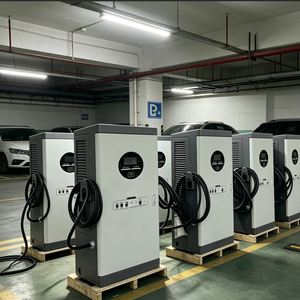
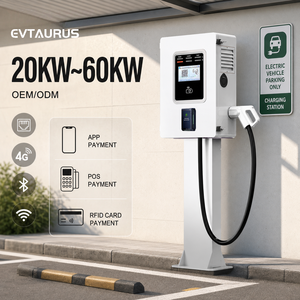
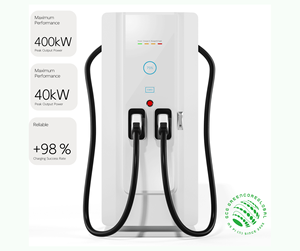
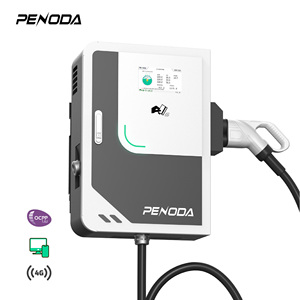
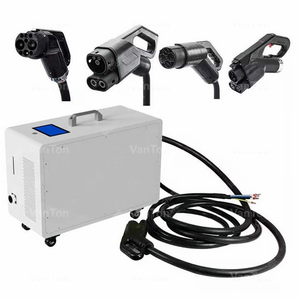
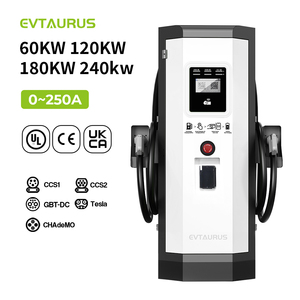
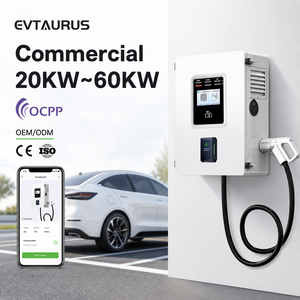
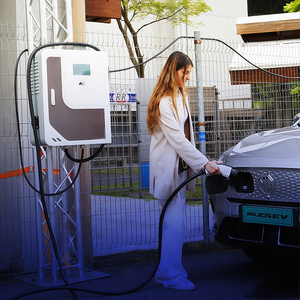
Silicon Carbide (SiC) power modules engineered for continuous high-voltage delivery up to 1000V DC with minimal thermal dissipation.
Full OCPP 1.6J & OCPP 2.0.1 compliance enabling dynamic load balancing, automated billing, and microgrid renewable integration.
Contact-cooled topology and IP55/IP65 potted housing protecting sensitive power electronics against harsh dust, moisture, and extreme climate.
As global electrification accelerates toward critical mass, selecting a qualified China Best EV Charger Factory & Supplier has evolved from a simple procurement transaction into a strategic long-term capital allocation decision. China currently accounts for over 70% of global EV charger supply chain capacity, spanning raw magnetic components, high-efficiency power conversion modules, liquid-cooling harnesses, and complex telemetry software systems.
However, navigating China's vast industrial landscape requires precise engineering evaluation. High-performance EV charging hardware must maintain structural integrity, electromagnetic compatibility (EMC Class B), and strict voltage stabilization across thousands of charging cycles under volatile environmental conditions. Buyers seeking true industrial value must look beyond surface specifications to inspect thermal dissipation architecture, PCB assembly quality (THT/SMD automation), firmware upgradeability, and international standard certification (CE, TÜV, UL, CB).
Modern commercial DC charging systems (ranging from 15kW wallboxes to 240kW ultra-fast ground-mounted units) rely on high-frequency power switching modules. Leading factories leverage Silicon Carbide (SiC) MOSFETs, which yield significant technical advantages over traditional IGBT designs:
Below is a comparative breakdown of industrial DC EV charging hardware configurations engineered for global distribution, showcasing technical ranges across wallbox and ground-mounted form factors.
| Parameter | Commercial DC Wallbox (15kW - 40kW) | Mid-Range Fast Charger (60kW - 120kW) | Ultra-Fast Power Hub (160kW - 240kW+) |
|---|---|---|---|
| Primary Application | Commercial Depots, Fleet Parking, Auto Workshops | Retail Hubs, Highway Stops, Commercial CPOs | Heavy-Duty Fleet Hubs, Public Fast Charging Corridors |
| Input Voltage | 380V / 400V AC ± 15% (3-Phase) | 380V / 400V AC ± 15% (3-Phase) | 380V / 400V AC ± 15% (3-Phase) |
| Output Voltage Range | 150V - 750V DC / 1000V DC option | 200V - 1000V DC Wide Voltage Range | 200V - 1000V DC High Current Output |
| Connector Standards | CCS1, CCS2, GB/T, CHAdeMO (Single Gun) | Dual Gun (CCS2/GB/T/CHAdeMO Dynamic Allocation) | Dual / Quad Liquid-Cooled Guns |
| Peak Power Efficiency | ≥ 95.0% | ≥ 95.5% | ≥ 96.0% (SiC Topology) |
| IP Protection Rating | IP55 Weatherproof Outdoor / Indoor | IP54 / IP55 Heavy Commercial Grade | IP55 Enclosure with Separated Duct Cooling |
| Communication Protocol | OCPP 1.6J / CAN Bus / RS485 | OCPP 1.6J & 2.0.1 / Ethernet / 4G / Wi-Fi | OCPP 1.6J & 2.0.1 / ISO 15118 (Plug & Charge) |
Our manufacturing philosophy bridges rigorous European engineering protocols with China's unmatched electronics manufacturing agility. Building on over 35 years of legacy power electronics expertise—derived from industrial power supplies, contact-cooled DC/DC converters, and automated production testing—our state-of-the-art facilities set the global standard for EV charging hardware reliable operations.
Unlike third-party packagers or pure trading operations, our manufacturing plant executes every development phase internally:
Thermal degradation is the leading cause of power loss and component failure in EV chargers. Our fast-charging cabinets incorporate segmented cooling channels and optional contact-cooling technology. By separating the electronics compartment from the air-cooling intake, internal power modules remain completely isolated from ambient dust, road salt, and moisture.
As the EV ecosystem matures, enterprise buyers, charge point operators (CPOs), and commercial vehicle fleets must anticipate several key structural shifts in EV charging hardware procurement:
With heavy-duty commercial logistics fleets electrifying rapidly, demand is moving beyond standard 120kW-240kW stations toward Megawatt Charging Systems capable of currents up to 1250A at 1500V DC. Factories with existing high-voltage experience (up to 1000V DC) are uniquely positioned to transition into liquid-cooled MCS topologies.
Manual RFID card authorization and app-based activation are giving way to automated seamless charging via ISO 15118-20 Plug & Charge. Secure hardware security modules (HSM) integrated into the charger controller allow encrypted PKI vehicle authentication. Furthermore, OCPP 2.0.1 compliance ensures enhanced remote diagnostic capabilities and smart grid energy routing.
Static power output leads to severe grid energy waste. Next-generation factory solutions utilize dynamic power matrix allocation, where power modules (e.g., 8x 30kW modules) are assigned dynamically to active charging ports in 30kW increments based on real-time vehicle State of Charge (SOC) requests.
Clear, definitive answers to technical and commercial queries raised by B2B buyers, municipal engineers, and CPO procurement teams.
Partner with China's leading precision EV charger factory. Contact our engineering team for customized technical schematics, factory audits, wholesale pricing, and tender evaluation assistance.