
Engineered by Premier Chinese Original Equipment Manufacturers for Heavy Duty & E-Mobility Applications
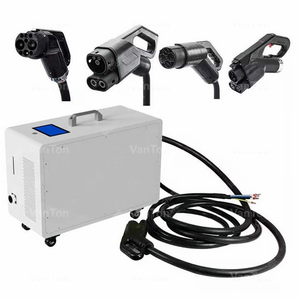
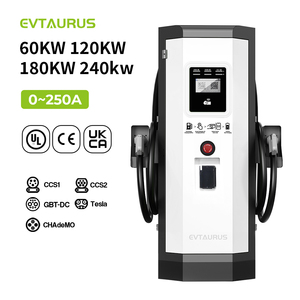
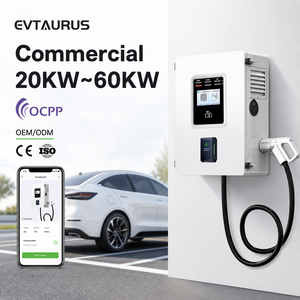
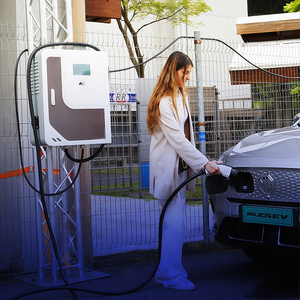
An In-Depth Engineering Analysis of Topologies, Wide-Bandgap Semiconductors, Thermal Dissipation, and Quality Audits
The global transition toward high-voltage electrification—encompassing Electric Vehicles (EVs), industrial automated logistics (AGVs), renewable energy storage systems (ESS), and heavy rail transit—has fundamentally transformed the engineering requirements for step-down direct-current (Buck Converter) power conversion. As industrial systems migrate from 400V architectures to ultra-high-voltage 800V DC buses, the demand for high-efficiency, thermal-resilient, and electro-magnetically compliant (EMC) Buck converters has surged exponentially.
China has consolidated its position as the world's leading manufacturing hub for advanced DC-DC switching regulators and power conversion systems. Combining dense silicon carbide (SiC) supply chains, automated surface-mount technology (SMT) lines, fully integrated PCB assembly, and state-of-the-art End-of-Line (EOL) testing systems, Chinese tier-1 OEMs and custom power electronics factories provide unparalleled economies of scale without compromising reliability. This whitepaper offers global procurement directors, hardware system architects, and electrical engineering leads a comprehensive evaluation framework for selecting high-reliability Buck converter suppliers in China.
Contemporary industrial Buck converters predominantly employ synchronous switching rectification, replacing traditional Schottky freewheel diodes with ultra-low $R_{DS(on)}$ MOSFETs or SiC FETs. This cuts conduction losses by up to 65%, enabling overall system conversion efficiencies to routinely surpass 98.2% even under variable load factors.
Leading Chinese manufacturing plants have transitioned from conventional wire-wound inductors to multi-layer planar transformers and inductors. This results in an unprecedented power density ($>30\text{ W/cm}^3$), exceptional thermal conduction via direct contact plates, and extremely repeatable leakage inductance parameters across mass production runs.
In high-voltage EV fast-charging stations and rail transport, non-isolated buck stages are paired with isolated high-frequency DC-DC stages. Top Chinese factories build robust safety margins with $>4000\text{V DC}$ dielectric withstand voltage testing (Hi-Pot) and double-reinforced insulation barriers compliant with IEC 61851 and UL 2202.
Thermal degradation and Electromagnetic Interference (EMI) represent the two primary failure mechanisms in solid-state switching regulators. In high-power industrial step-down applications, sudden switching transients ($di/dt$ and $dv/dt$) induce severe high-frequency ringings and conductive emissions.
Advanced Thermal Management: Premier Chinese manufacturers utilize direct-contact aluminum housing coupled with liquid-cooling channels or potted thermal conductive polymers ($\lambda > 3.5\text{ W/m}\cdot\text{K}$). Potting completely eliminates air pockets, protecting sensitive planar magnetics and power switches against moisture, salt spray, vibration (up to 10G RMS), and mechanical shock in harsh mining or intralogistics environments.
EMI Filtering Standards: Modern Buck systems built by top-tier suppliers feature integrated multi-stage LC input and output filters alongside active snubber networks. These configurations ensure strict adherence to CISPR 25 Class 5 and EN 55032 Class B standards, preventing switching noise from compromising onboard CAN bus communications, sensitive sensor suites, or vehicle telemetry networks.
Quantitative Metrics for Hardware Evaluation & Factory Auditing
| Specification Parameter | Standard Industrial Grade | Tier-1 Chinese OEM Standard (e.g. Deutronic/Perx Standards) | Impact on End-System Performance |
|---|---|---|---|
| Semiconductor Switching Type | Standard Silicon (Si) MOSFET / IGBT | Silicon Carbide (SiC) / GaN FETs | Reduces switching losses by 70%, permits 200kHz+ frequencies. |
| Input Voltage Window | 18V – 72V DC (Narrow) | 200V – 900V DC Continuous (Ultra-Wide) | Directly compatible with 400V/800V EV traction battery buses. |
| Peak Energy Conversion Efficiency | 88.0% – 92.5% | 96.5% – 98.6% Synchronous Buck | Drastically reduces heat dissipation; simplifies cooling systems. |
| Output Voltage Ripple ($V_{pk-pk}$) | < 150 mV | < 15 mV Ultra-Low Noise | Protects microcontrollers, ECU modules, and battery BMS systems. |
| Thermal Packaging Strategy | Forced Air Cooling (Internal Fan) | Full Potting + Contact / Liquid Baseplate Cooling | IP67/IP69K sealing against dust, liquids, and thermal shock. |
| Digital Interface Protocols | Analog PWM Control Only | CAN 2.0B, SAE J1939, RS485, Modbus TCP | Real-time telemetry, remote parameter updating, & diagnostics. |
| Certifications & Standards | Basic CE / RoHS | IATF 16949, ISO 9001, CE, UL, EN 50155 (Rail) | Guarantees traceably high MTBF (>500,000 hours per Telcordia SR-332). |
System integrators and OEM buyers evaluating China's power electronics supply chain must align their procurement strategies with four key technical shifts currently redefining step-down power electronics:
1. Bidirectional Buck-Boost Interoperability: Modern energy networks demand seamless bi-directional power flow. Future Buck converters are designed to function dynamically as step-down regulators during vehicle charging and reverse-operate as boost converters for Vehicle-to-Grid (V2G) or grid-support applications.
2. AI-Driven Predictive Maintenance & DSP Monitoring: Digital signal processors (DSPs) are replacing legacy analog control chips. By continuously analyzing component temperature, switching jitter, output ripple drift, and electrolytic capacitor ESR degradation, next-gen converters broadcast telemetry via CAN bus to signal maintenance *before* system failures occur.
3. Dynamic Power Allocation in EV Fast Charging: High-power fast chargers (60kW to 240kW+) utilize modular 20kW/30kW/40kW Buck converter stacks. Modern software-defined power matrices dynamically reassign power modules based on connected vehicle battery state of charge (SoC), maximizing charger utilization factors.
4. Near-Zero Standby Power & Carbon Footprint Auditing: As international ESG compliance strictures tighten, Chinese factories are auditing the life-cycle carbon footprint of their magnetics, aluminum extrusions, and power chips. High-frequency designs cut ferrite volume by 40%, reducing total embedded manufacturing energy.
Sourcing directly from tier-1 Chinese Buck converter factories provides industrial buyers with clear strategic advantages:
Addressing Critical Electrical, Mechanical, and Commercial Logistics Inquiries
Consult directly with our senior power electronics engineering team. Receive custom engineering drawings, detailed thermal modeling data, and competitive factory-direct pricing tailored to your exact technical specifications.
Inquire Now