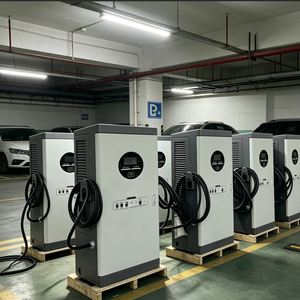
High Power DC EV Charger 30kW-240kW Fast Charging Station for Electric Vehicles
- Power Output: 30kW to 240kW Dynamic Modular
- Wide Voltage: 200V - 1000V DC High Efficiency
- Dual Connectors with Smart Load Balancing

Engineered for automotive assembly lines, commercial fleet depots, diagnostic labs, and public fast-charging networks with full OCPP compliance and dynamic battery health monitoring.
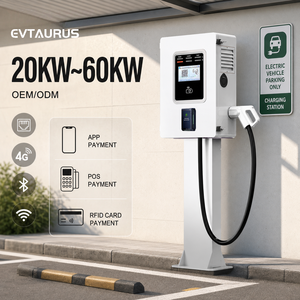
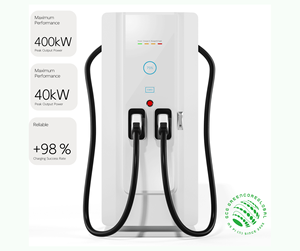
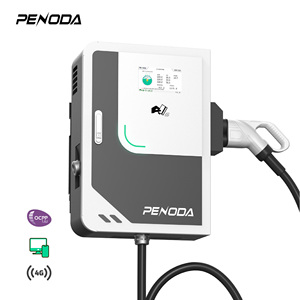
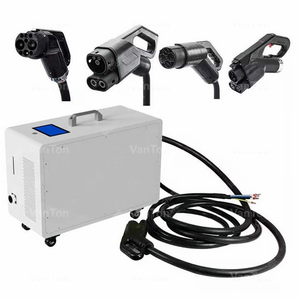
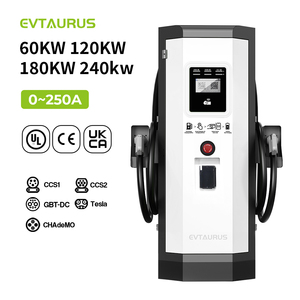
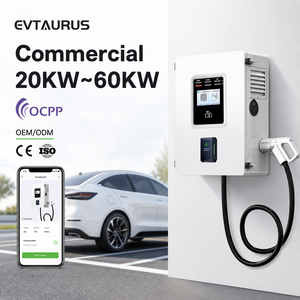
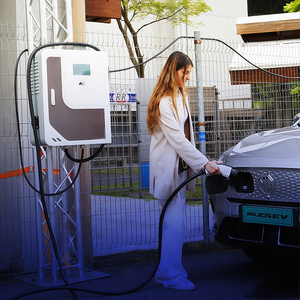
Unlike standard assemblers, our vertically integrated manufacturing ensures complete control over circuit design, SMT/THT PCB production, potting, firmware development, and automated testing.
Over three decades of manufacturing battery chargers and diagnostic test rigs for leading European and global automotive OEMs. Built to endure continuous 24/7 duty cycles on assembly lines without unexpected downtime.
From component placement (SMD/THT) to precision potting and final assembly, our hardware and firmware remain fully integrated under one roof. This allows rapid custom engineering adaptions even for mid-volume orders.
Our advanced DC/DC converters and chargers feature planar transformers for ultra-flat form factors. Efficient contact-cooling dissipates heat directly to vehicle or cabinet chassis, eliminating fan failures in dusty environments.
Networked power chargers automatically record and export charging curves, battery internal resistance, and state-of-health (SOH) parameters. Fully compatible with automated EOL factory systems and cloud telemetry.
We combine modular instrumentation from global leaders with our proprietary DTS software platform to build turnkey test stations capable of multi-variant specimen validation on a single manufacturing bench.
All hardware is verified according to CE, ISO/IEC standards, DIN EN 61851, and SAE J1939 protocols. Rigorous vibration, shock, humidity, and wide thermal range (-40°C to +85°C) stress testing is standard.
As global transport electrification accelerates, the demand for ultra-reliable battery diagnostic systems, automated End-of-Line (EOL) production line chargers, and high-power DC fast charging infrastructure has shifted dramatically. International buyers, automotive engineering teams, and commercial fleet operators require a nuanced technical understanding when sourcing battery testers and DC power converters from China's top tier suppliers.
Key Procurement Metric: Industrial battery testing is no longer merely about verifying static voltage; it requires dynamic impedance spectroscopy, real-time CAN bus telemetry analysis, and modular power conversion capability across 400V to 1000V architecture.
In modern automotive manufacturing and commercial fleet maintenance, battery packs represent up to 40% of total vehicle value. Ensuring cell balance, monitoring internal resistance degradation, and validating State-of-Charge (SOC) dynamic response during production is essential to prevent thermal runaway risks and costly field recalls.
Leading Chinese battery tester exporters have integrated automated End-of-Line (EOL) testing protocols directly into high-power charging platforms. By applying high-frequency pulsed DC loads while monitoring internal cell voltages via CAN/J1939 interfaces, modern diagnostic chargers map precise Electrochemical Impedance Spectroscopy (EIS) profiles within seconds. This data ensures that only verified, structurally sound battery packs leave assembly facilities.
When evaluating battery diagnostic suppliers and high-power charging equipment, engineering procurement teams must look beyond superficial datasheet values. The matrix below outlines critical performance criteria separating consumer-grade testing gadgets from enterprise industrial systems:
| Technical Parameter | Standard Commercial Battery Testers | Next-Gen Industrial Diagnostic Systems |
|---|---|---|
| Voltage Range & Scale | 12V / 24V Lead-Acid & Basic Lithium Packs | 200V - 1000V DC Ultra-Wide Range (SiC Based) |
| Cooling Methodology | Forced Air Fans (Vulnerable to Dust/Oil) | Liquid Cooling & Potted Contact Cooling |
| BMS Integration Protocols | Basic OBD-II or Standalone Manual Diagnostics | Automotive CAN 2.0B, SAE J1939, OCPP 2.0.1, Modbus TCP |
| Measurement Accuracy | ±1.5% Voltage / Current Deviation | < ±0.1% Full Scale High Precision Sampling |
| Industry 4.0 Traceability | Local LCD Display or Offline SD Card Log | DC-Connect Cloud Telemetry, SQL Database Integration |
| Duty Cycle Rating | Intermittent Intermittent Operations | Continuous 24/7 Assembly Line Continuous Duty |
The industry transition from legacy Silicon IGBT switching topographies to Silicon Carbide (SiC) MOSFET power electronics has revolutionized high-power DC chargers and battery load testers. SiC power modules permit switching frequencies upwards of 100 kHz, yielding several immediate engineering advantages:
• Size and Weight Reduction: Higher switching frequencies decrease the physical size of magnetic components (inductors and transformers) by up to 50%, enabling compact wallbox form factors for 30kW-60kW DC chargers.
• Superior Dynamic Load Response: SiC-based testers adjust load current within micro-seconds, mimicking real-world heavy acceleration and regenerative braking conditions on traction battery packs.
• Heat Dissipation Efficiency: Operating efficiency exceeding 96.5% drastically minimizes internal thermal dissipation, allowing fully enclosed IP55 to IP65 sealed enclosures suitable for hostile industrial environments.
When establishing long-term supply agreements with Chinese exporters and manufacturing partners, international buyers are adopting comprehensive Total Cost of Ownership (TCO) evaluation frameworks:
A. Hardware Scalability & Modular Expansion: Purchasing modular 30kW/40kW power units that plug into standard 19-inch sub-racks allows fleet operators to expand total depot power from 60kW to 240kW as fleet size grows, avoiding premature infrastructure replacement.
B. Unified Software Infrastructure (DTS Ecosystems): Hardware must be supported by adaptable test software. Systems running modular test software allow engineering teams to write custom test sequences, adjust voltage threshold cutoffs, and automate report generation across multi-brand equipment fleets.
C. Global Regulatory & Safety Compliance: Supplier evaluation must verify compliance with IEC 61851-1/23/24 for EV charging safety, ISO 26262 functional safety, and CE/UL certifications. High galvanic isolation (>2.5kV AC) between grid input, DC output, and diagnostic communication interfaces is non-negotiable for operator safety.
Clear answers to complex technical questions asked by engineering leads, procurement officers, and automotive plant managers.
Our power equipment portfolio covers standard low-voltage inputs (12V/24V/48V) up to high-voltage industrial inputs operating up to 900V DC continuous (DVCHx3 series). Chargers and diagnostic stations operate on 3-phase grid supplies (380V - 480V AC, 50/60Hz) with dynamic internal adjustment covering output test ranges from 200V to 1000V DC.
Yes. Our industrial charging computers and test benches are built specifically for End-of-Line (EOL) manufacturing environments. They feature programmable charging/discharging curves for Lithium-Ion (NMC, LFP) and Lead-Acid chemistry, real-time CAN/J1939 diagnostic interfaces, and DC-Connect telemetry for factory-wide data logging.
Because complete product development, PCB assembly (SMT/THT), potting, and functional testing take place in-house under our DEUTRONICsystems division, custom mechanical mounting, unique communication protocols, and firmware modifications are fully feasible even for low to medium volume runs.
Our commercial fast charging stations are engineered with multi-protocol communication controllers. Systems can be configured with dual or triple connector outlets (e.g., CCS2 + GB/T or CCS1 + CHAdeMO) featuring automatic dynamic power distribution, allowing simultaneous fast charging and BMS diagnostic monitoring on different vehicle types.
All hardware incorporates hardware-level overvoltage, overcurrent, short-circuit, and thermal isolation protection. Real-time BMS polling continually monitors individual cell temperatures and voltage differentials. If parameters exceed configured safe operating limits, the system triggers an emergency shutdown within milliseconds.
We back our equipment with comprehensive standard warranties, spare parts availability, remote cloud diagnostic support, and field support through our authorized international distribution and service partners spanning over 40 countries worldwide.
Consult with our lead application engineers to request detailed technical datasheets, CAD drawings, or custom OEM manufacturing quotes.
Get a Quote