
Navigating the Global EV Supply Chain: Why OEM Partner Selection Defines Grid Reliability
As the global electrification transition accelerates toward mass-market commercial adoption, procurement directors, CPO (Charging Point Operator) executives, and automotive OEMs face an increasingly complex technical landscape. Selecting a premier manufacturing partner in China is no longer merely a low-cost sourcing decision—it is a long-term strategic alignment requiring deep power electronics expertise, compliance with multi-regional grid standards, robust hardware-firmware integration, and proven field durability under harsh operating conditions.
1. Technical Architecture & Topologies in Modern AC/DC Charging Manufacturing
The distinction between basic EV supply equipment (EVSE) and enterprise-grade industrial power conversion lies in the internal power topology and thermal handling capabilities. Advanced manufacturing facilities in China have evolved from basic assembly hubs into high-precision technology centers capable of co-developing Silicon Carbide (SiC) power switching modules, high-frequency planar transformers, and advanced sinusoidal commutation algorithms.
When sourcing AC chargers (3.7kW to 22kW) and DC fast charging equipment (15kW to 240kW+), procurement teams must audit the vendor's internal R&D expertise across four primary technical vectors:
Power Density & SiC Module Topologies
By transitioning from conventional Silicon IGBTs to Wide Bandgap (WBG) Silicon Carbide MOSFETs, our charging platforms achieve elevated switching frequencies (up to 100 kHz), reducing magnetic component footprint by 40% while raising energy conversion efficiency beyond 96.5%. This minimizes internal heat dissipation, enhancing operational reliability in sealed IP65 enclosures.
Interoperability & Protocol Stacks
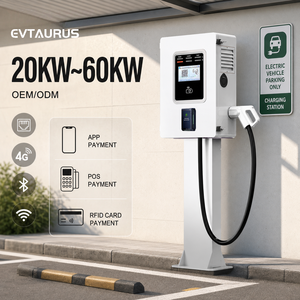
Global deployment demands full compliance with ISO 15118 (Plug & Charge / V2G), DIN 70121, and OCPP 1.6J / 2.0.1 JSON communication protocols. OEM equipment must seamlessly interface with diverse backend CPO software platforms, credit card POS terminals, RFID authorization systems, and real-time smart grid demand-response networks.
Industrial Protection & Potting
For outdoor commercial depots, automotive assembly lines, and severe operating environments, electrical components require fully potted sub-assemblies, conformally coated PCBs, contact cooling plates, and ruggedized vibration-proof mechanical layouts rated for long MTBF metrics under extreme temperature variations (-35°C to +55°C).
2. OEM/ODM Product Matrix & Specification Comparison
To assist global procurement managers in matching hardware specs with operational use-cases, the following matrix highlights core engineering characteristics across commercial, residential, wallbox, and mobile DC fast-charging series.
| Category / Form Factor | Power Output Range | Supported Connector Standards | Grid Input Rating | Ingress / Impact Protection | Target Application Spectrum |
|---|---|---|---|---|---|
| Commercial AC Wallbox / Pedestal | 7kW, 11kW, 22kW (3-Phase) | Type 2 (IEC 62196), Type 1 (SAE J1772) | 230V AC / 400V AC ±15% | IP55 / IK10 Rated | Workplaces, Multi-Family Residential, Retail Depots |
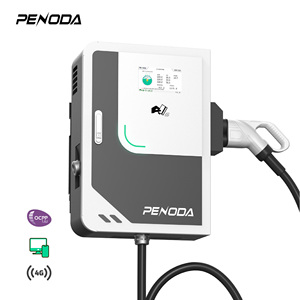
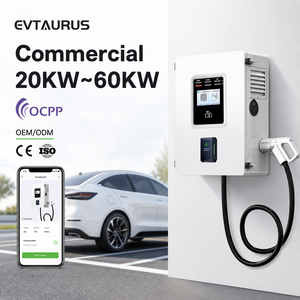
| Compact DC Wallbox Fast Charger | 15kW, 20kW, 30kW, 40kW | CCS1, CCS2, CHAdeMO, GB/T | 380V / 400V AC 3-Phase | IP54 / IP55 Contact Cooled | Fleets, Auto Dealerships, Commercial Garages |
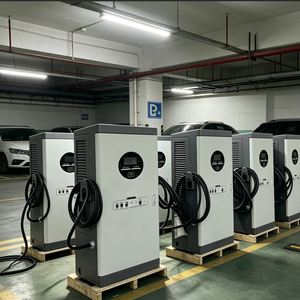
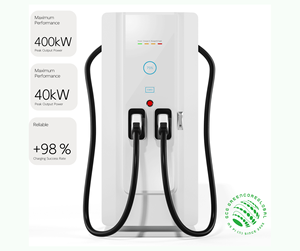
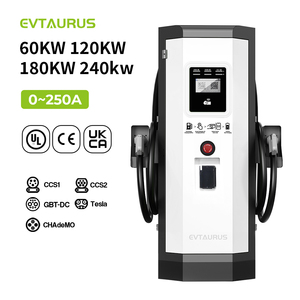
| Heavy-Duty Ground-Mounted DC Station | 60kW, 80kW, 120kW, 160kW, 240kW | Dual Connector (CCS2 + GB/T / CHAdeMO) | 400V AC 3-Phase + Neutral + PE | IP55 Cabinet / Force Air / Liquid Optional | Highway Service Areas, Public Hubs, Bus Terminals |
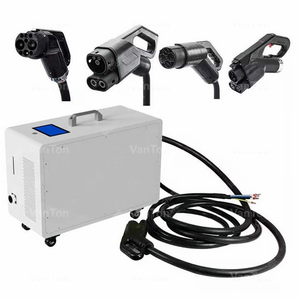
| Mobile & Emergency DC Fast Charger | 15kW, 20kW Movable Unit | CCS2 / CCS1 Single Gun (5m Cable) | 380V AC Industrial Plug Input | Heavy-Duty Wheeled Chassis IP54 | Roadside Assistance, Fleet Servicing, Test Tracks |
3. Enterprise Manufacturing Strengths: Combining Precision Engineering with Scale
Building on over 35 years of industrial power electronics heritage—derived from rigorous German design, high-voltage vehicle assembly line chargers, 900V DC/DC converter platforms, potted logistics power supplies, and automated test systems—our manufacturing ecosystems in China deliver an unparalleled balance of enterprise quality control and manufacturing scalability.
In-House End-to-End Production & Quality Control
Unlike third-party brand assemblers who outsource critical components, top-tier Chinese factories maintain complete control over the vertical production pipeline. Development, PCB surface-mount technology (SMT) assembly, through-hole technology (THT), vacuum potting, mechanical fabrication, and final electrical testing take place under one unified ISO 9001 and IATF 16949 certified roof.
This integrated operational structure allows rapid prototype modification, tight quality loop feedback, and strict adherence to international safety standards including CE, UL, CB, and UKCA certifications.
The "Single-Source" Supply Chain Advantage
- Reduced Lead Times: In-house SMT tooling and firmware programming cut custom modification timelines from months to weeks.
- Traceable Charging Data: Proprietary DC-Connect network architecture allows centralized plant monitoring and complete component traceability.
- Ruggedized Longevity: Potted power modules prevent dust ingress, ambient moisture corrosion, and vibration fatigue in harsh outdoor industrial environments.
- Bespoke Customization: Flexible OEM/ODM branding, custom enclosure color schemes, cable length adjustments, and tailored OCPP firmware integration.
4. Future Procurement Trends in EV Charging Infrastructure (2025–2030)
As grid operators and charging network investors optimize their capital expenditures (CAPEX) and operational expenses (OPEX), EVSE procurement criteria are rapidly evolving beyond simple dollar-per-watt metrics. Buyers evaluating top Chinese AC and DC charger manufacturers must align their sourcing strategies with three mega-trends shaping the next decade of transportation electrification:
- Dynamic Load Balancing (DLB) & Microgrid Integration: Modern commercial sites often face electrical grid service constraints. Next-generation AC and DC chargers must feature internal real-time Dynamic Load Management (DLM) software modules capable of balancing power distribution across dozens of chargers without tripping facility main breakers. Integration with solar PV and stationary Battery Energy Storage Systems (BESS) via Modbus TCP or Ethernet is becoming mandatory.
- Bidirectional Charging (V2G, V2H, V2X): Driven by standard protocols such as ISO 15118-20, bidirectional AC and DC charging stations are transitioning from pilot projects to commercial deployment. Infrastructure buyers are procuring hardware capable of enabling electric vehicle fleets to act as distributed energy resources, supplying power back to grid networks during peak tariff periods.
- Modular Architecture & Low-Downtime Serviceability: High-power DC fast charging stations are embracing hot-swappable power conversion modules (e.g., 20kW/30kW/40kW building blocks). If a single module fails, the station remains operational at reduced capacity while field engineers swap out the modular matrix in minutes, drastically reducing MTTR (Mean Time to Repair) and preserving operator revenue streams.