
Commercial, industrial, and fleet electrification power conversion solutions engineered for mission-critical reliability and European CE safety compliance.
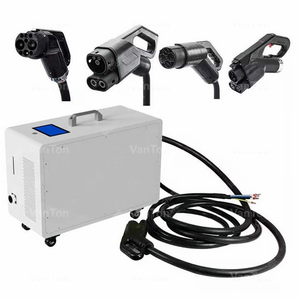
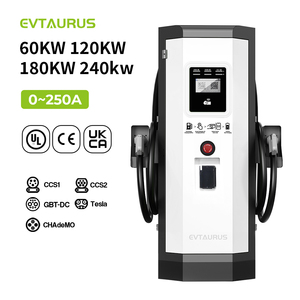
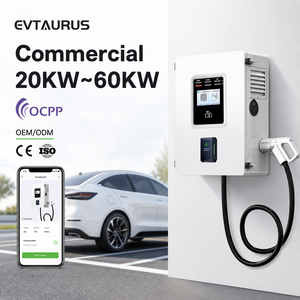
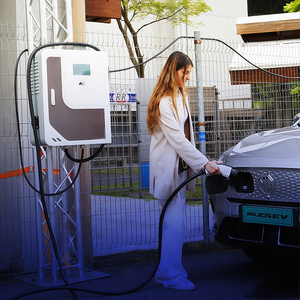
Galvanic isolation in direct current (DC) power conversion is an indispensable safety and operational requirement across modern electric vehicle charging infrastructure, industrial automation, rail transport, and renewable microgrids. As global battery architectures migrate from 400V baseline topologies to high-voltage 800V and 1000V DC platforms, evaluating CE certified isolated converter factories and suppliers requires an in-depth understanding of high-frequency planar magnetics, soft-switching power topologies, electromagnetic compatibility (EMC), and stringent European safety directives.
Key Takeaway for B2B Procurement Teams: Galvanic isolation provides physical electrical separation between input grid infrastructure and sensitive output loads. In fast DC charging (30kW–240kW) and vehicle-mounted DC/DC conversion, certified isolation prevents dangerous ground loops, mitigates common-mode electrical noise, and ensures Safety Extra-Low Voltage (SELV) integrity under single-fault conditions.
Modern CE-certified isolated converters utilize advanced resonant and phase-shifted converter architectures to achieve peak energy efficiencies exceeding 97.5% while minimizing volumetric footprint:
The transition from conventional Silicon (Si) IGBTs to Silicon Carbide (SiC) MOSFETs within isolated converter stages has revolutionized power density. SiC devices offer 10x higher breakdown field strength and superior thermal conductivity. This allows isolated converter suppliers to shrink high-frequency transformer cores using planar magnetics, replacing bulky liquid-cooling jackets with compact contact-cooled aluminum housings or IP65/IP67 potted enclosures suitable for aggressive ambient operating environments (-40°C to +75°C).
When sourcing from industrial power electronics factories, buyers must verify compliance with specific European Harmonized Standards under the CE marking framework:
| CE Directive | Harmonized Standard | Engineering Scope & Safety Verification |
|---|---|---|
| Low Voltage Directive (LVD) 2014/35/EU | EN 61851-23 / EN 62477-1 | Evaluates insulation breakdown strength (3000V AC dielectric withstand), creepage/clearance distances, protective earthing, and thermal overload protection. |
| EMC Directive 2014/30/EU | EN 61000-6-2 / EN 61000-6-4 | Guarantees immunity against heavy industrial electrical fast transients (EFT), surge immunity, and limits conducted/radiated electromagnetic emissions. |
| Radio Equipment Directive (RED) 2014/53/EU | EN 301 489-1 / EN 301 489-17 | Applies to smart DC chargers equipped with integrated RFID, cellular 4G/5G POS terminals, and Wi-Fi/OCPP communications. |
Combining over 35 years of industrial power electronics R&D with full in-house manufacturing—from SMD/THT PCB assembly to automated end-of-line testing.
Complete control over hardware engineering, firmware development, SMT board assembly, automated potting, and device assembly ensures rapid prototype iterations and tight quality control for small to high-volume production series.
Designed for survival in extreme intralogistics, off-highway transport, and unconditioned outdoor environments. Potted power modules eliminate dust ingress, withstand severe mechanical vibration, and utilize contact plate cooling.
Every single power unit undergoes rigorous End-of-Line (EOL) testing using proprietary automated test software (DTS). Full electrical diagnostic logging, burn-in validation, and traceability reports are automatically archived.
Proprietary DVCHx3 converter series operates smoothly under wide input voltage ranges up to 900 VDC. Perfect for heavy duty commercial vehicle electrification, traction power, fuel-cell auxiliary converters, and solar microgrids.
Built-in industrial communication interfaces enable simple parameterization and real-time remote monitoring over CAN bus, SAE J1939, or network connected DC-Connect software for plant-wide data integration.
With operational hubs and certified technical partners across Europe, North America, and Asia-Pacific, fast spare parts delivery, local commissioning, and factory repair services keep downtime measured in hours.
As the global energy transition accelerates, strategic buyers must look beyond immediate line-item hardware costs and align procurement strategies with emerging market trends driving power electronics over the next decade.
Passenger EVs, electric buses, and heavy off-highway equipment are moving from 400V battery architectures to 800V+ systems to minimize copper weight and enable sub-15-minute ultra-fast charging. Factories supplying isolated converters must provide wide output voltage capability (200V–1000V DC) to maintain forward compatibility across multi-standard charging fleets.
Software communication standards are shifting rapidly. Procurement specifications now mandate native support for OCPP 2.0.1 and ISO 15118-20 (Plug & Charge with automated TLS certificate handling). Modern CE-certified smart chargers integrate secure hardware crypto-elements directly onto the controller PCB to prevent unauthorized network intrusion.
Commercial station operators demand modular sub-rack architectures. By configuring isolated 15kW, 20kW, or 30kW power modules in parallel inside 60kW to 240kW ground stations, operators achieve high availability. If a single isolated module experiences a fault, remaining units continue running at partial capacity, preventing complete station outages.
Leading industrial procurement officers prioritize repairability, modular spare-part availability, and extended lifecycle support. High efficiency topologies (>97%) dramatically reduce thermal loss costs over 10+ years of continuous operating cycles, making energy efficiency a key contributor to ROI.
Engineering and procurement guidance for selecting CE-certified isolated converters and commercial EV charging hardware.
Our isolated converter product lines span standard low-voltage DC inputs (12V, 24V, 48V, 110V DC) up to high-voltage industrial and transportation platforms supporting continuous inputs up to 900V DC (DVCHx3 series). AC input fast charging stations support standard 380V–415V 3-phase grid power.
Galvanic isolation uses high-frequency transformer coupling to completely isolate the high-voltage AC grid from the vehicle battery. This prevents ground fault currents from travelling back to the main distribution transformer, reduces common-mode voltage spikes, protects vehicle electronics, and complies with mandatory SELV electrical safety regulations.
All converter designs feature internal multi-stage LC input/output filtering, localized shield grounding, and low-emission switching layouts. Units undergo testing in accredited electro-magnetic anechoic chambers to certify compliance with EN 61000-6-2 (Industrial Immunity) and EN 61000-6-4 (Industrial Emissions).
Yes. Because initial R&D, PCB layouts, firmware engineering, potted housing molding, and assembly take place in-house, we offer tailored mechanical modifications, custom output voltage profiling, bespoke CAN message mapping, and private-label branding for OEM equipment manufacturers.
Our fast DC chargers support multi-standard configurations including CCS Combo 2 (European standard), CCS Combo 1 (North American standard), CHAdeMO, and GB/T (Chinese standard). Connectivity features OCPP 1.6J and 2.0.1 compliance via Ethernet, 4G, or Wi-Fi for management platform integration.
Potted converters feature high thermal conductivity silicone or polyurethane encapsulation coupled to contact cooling plates. They include multi-point micro-controller thermal sensing that dynamically derates output current if ambient temperatures exceed safe operating limits, preventing catastrophic semiconductor failure.
Looking for verified high-power DC fast charging hardware, customized isolated converters, or OEM contract manufacturing? Speak directly with our power application engineering team today.
Inquire Now