
Engineered for high-uptime depot operations, logistics hubs, and public fast-charging infrastructure. CE certified, OCPP 1.6/2.0.1 compliant, and wide-voltage scalable.
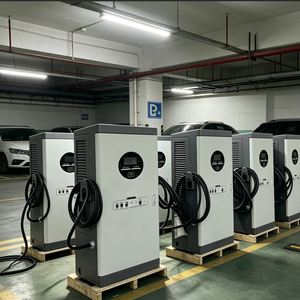
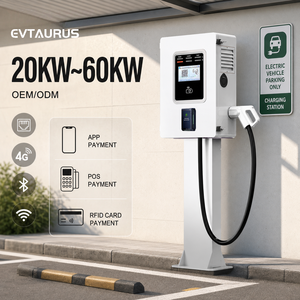
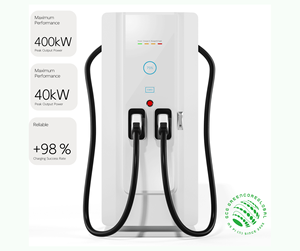
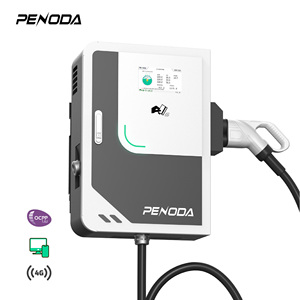
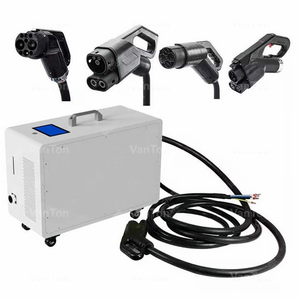
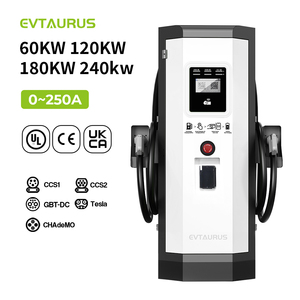
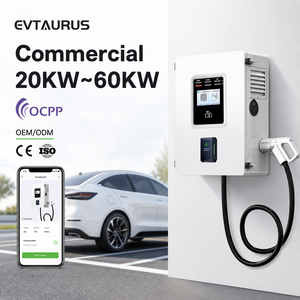

The global transition to zero-emission commercial transport requires a fundamental shift in grid-to-battery energy transfer systems. For commercial logistics providers, municipal transit operators, and EV fleet managers, selecting a high-power charging platform involves far more than comparing basic kilowatt ratings. It demands a rigorous evaluation of thermal topology, dynamic load balancing algorithms, system redundancy, communication protocol alignment (OCPP 2.0.1 and ISO 15118), and regulatory safety compliance under European CE standards (including IEC 61851-1, IEC 61851-23, and EN 61000 EMC series).
As an established CE Certified Fleet Charger Factory & Supplier backed by over 35 years of high-performance industrial power electronics heritage, our manufacturing framework bridges the gap between automotive assembly-line precision and industrial-grade outdoor durability. By leveraging state-of-the-art Silicon Carbide (SiC) semiconductor modules, contact cooling systems, potted power converters, and intelligent telemetry, our DC fast-charging stations deliver high power density while significantly lowering Total Cost of Ownership (TCO).
Strategic insights for procurement directors, fleet operators, and infrastructure developers planning 2025–2030 depot electrification strategies.
Commercial vehicle manufacturers are rapidly moving from traditional 400V battery buses to 800V and 1000V high-voltage platforms to reduce vehicle cable weight, minimize internal heat generation, and shorten recharge cycles. Future-proof procurement requires fleet chargers equipped with wide-output-voltage power modules capable of scaling seamlessly from 150V DC up to 1000V DC without sacrificing power efficiency.
By transitioning from silicon IGBTs to wide-bandgap Silicon Carbide (SiC) MOSFETs, modern factory-direct chargers achieve power conversion efficiencies exceeding 96.5%. This shift drastically lowers thermal losses inside the cabinet, reduces cooling energy demand, and protects fleet operators against long-term electricity overhead.
While standard CCS2 and GB/T connectors efficiently support 30kW to 240kW urban delivery vehicles and heavy-duty vans, class-8 long-haul trucks demand next-generation Megawatt Charging System (MCS) standards capable of handling up to 3.75 MW peak power. Forward-thinking procurement strategies now prioritize modular cabinet architectures where dynamic power sharing allows multiple low-to-mid power dispensers to coalesce power modules into high-amperage outputs during peak charging windows.
Manual RFID badge swipes and smartphone applications introduce point-of-sale friction and operational delay in enterprise depots. The industry standard is shifting toward ISO 15118 implementation, enabling automated cryptographic handshake between vehicle software and charger firmware for instantaneous "Plug & Charge" authentication.
Furthermore, bidirectional Vehicle-to-Grid (V2G) and Vehicle-to-Building (V2B) capabilities are becoming key procurement criteria. Fleet batteries act as distributed energy storage assets, injecting power back into depot microgrids during peak demand periods to earn grid resilience incentives and avoid costly demand charges.
Procurement teams are avoiding proprietary vendor lock-in by mandating strict adherence to open-source control protocols. OCPP 1.6 J and OCPP 2.0.1 compliance ensures seamless integration into multi-vendor fleet management software (FMS), automated building management systems (BMS), and remote energy optimization suites. Features like advanced ISO/IEC 27001 cybersecurity, encrypted firmware updates, and remote diagnostic metrics are non-negotiable for enterprise fleets.
Analyzing the hardware engineering progression from early AC slow-chargers to high-density, potted, and liquid-cooled DC fast-charging systems.
The evolution of fleet charging hardware focuses on solving three critical operational challenges: thermal dissipation, power quality (harmonic distortion), and enclosure protection against environmental contaminants. Traditional air-cooled chargers frequently experience power derating when operating in harsh industrial environments or extreme ambient temperatures (+45°C to +50°C).
| Feature Parameter | Legacy Generation (IGBT / AC Air) | Current Enterprise Standard (SiC / Modular DC) | Next-Gen Industrial Fleet Solution (Potted / Ultra-Wide DC) |
|---|---|---|---|
| Peak Efficiency | 91.5% - 93.0% | 95.0% - 96.0% | 96.5% - 98.2% (SiC Modular Topology) |
| Output Voltage Range | 200V - 500V DC | 150V - 750V DC | 150V - 1000V DC (Ultra-Wide Matrix) |
| Ingress Protection | IP44 / IP54 (Ventilated) | IP55 Cabinet / IP65 Module | IP65 Full Potted Electronics & Sealed Modules |
| Cooling Technology | Standard Forced Air | Variable Fan Air / Contact Plate | Advanced Liquid / Contact Cooled Planar Magnetics |
| Protocol Compatibility | OCPP 1.5 / Basic Modbus | OCPP 1.6 J JSON | Native OCPP 2.0.1, ISO 15118-20, CAN / J1939 |
| Mean Time Between Failures (MTBF) | < 30,000 Hours | ~ 50,000 Hours | > 100,000 Hours (Industrial Grade) |
Our OEM factory engineering approach integrates potted electrical modules, planar magnetics, and galvanic isolation topologies directly derived from our decades of heavy-industrial and railway power supply manufacturing. By sealing sensitive power electronics against airborne dust, conductive soot, chemical fumes, and moisture, our fleet charging systems maintain maximum rating performance without thermal throttling.
Why Tier-1 automotive manufacturers, fleet operators, and global distributors partner with our certified manufacturing facility.
Built upon decades of high-precision power supply design, our engineering teams excel in creating durable hardware for automotive assembly lines, rail fleets, and intralogistics systems worldwide.
From circuit design and firmware development to surface-mount technology (SMT) assembly, automated potting, and full-load burn-in testing, 100% of production processes are internally audited and controlled.
Fully compliant with EU Low Voltage Directive (LVD 2014/35/EU), EMC Directive (2014/30/EU), and Radio Equipment Directive (RED). Manufactured under strict ISO 9001 and ISO 14001 quality management systems.
Whether requiring compact 20kW wallbox enclosures, mobile 20kW service units, ground-mounted 80kW dual-gun posts, or 240kW split-cabinet systems, our factory offers tailored OEM/ODM modifications.
Integrated telemetry options enable real-time remote diagnostics, predictive maintenance alerting, dynamic thermal monitoring, and automated over-the-air (OTA) firmware updating.
Supported by established service locations across North America, Europe, and Asia-Pacific, ensuring spare part availability, rapid technical response, and on-site engineering commissioning.
Direct answers to critical technical, compliance, and integration questions raised by industrial procurement teams.
Our fleet chargers undergo comprehensive third-party laboratory testing to verify compliance with key European safety directives. Core certifications include EN 61851-1 (Electric vehicle conductive charging systems - General requirements), EN 61851-23 (DC electric vehicle charging station), and EN 61851-24 (Digital communication between a DC EV charging station and an electric vehicle). Electromagnetic Compatibility (EMC) is tested under EN 61000-6-2 (Immunity for industrial environments) and EN 61000-6-4 (Emission standard for industrial environments). Electrical safety compliance encompasses insulation resistance, dielectric withstand voltage, ground continuity, over-current, surge protection, and emergency shut-off protocols.
Dynamic Power Management (DPM) utilizes real-time communication between the fleet charger network, the depot's master controller, and local smart meters. When multiple vehicles plug in simultaneously, the system evaluates individual State of Charge (SoC), scheduled departure times, and overall site grid limits. It dynamically allocates available DC power modules in fine increments (e.g., 15kW or 30kW steps) across connected dispensers. This prevents grid demand spikes, eliminates expensive utility penalty fees, and ensures high-priority delivery vans are fully charged prior to shift start.
DC Wallboxes (20kW to 40kW) offer compact footprints, lower upfront capital expenditure, and simplified mounting on structural walls or light stanchions. They are ideal for overnight depot trickling, fleet service bays, and urban delivery vans where space is constrained. Large ground-mounted split or monolithic stations (60kW to 240kW+) require dedicated concrete pad foundations and high-capacity transformer feeds, but provide rapid turnaround charging (30 to 45 minutes) for heavy-duty commercial vehicles during active shifts.
In industrial depots, coastal ports, or dusty logistics yards, traditional fan-cooled power modules draw in airborne debris, moisture, salt air, and chemical pollutants that cause short-circuits or premature component degradation. Potted modules enclose sensitive PCBs and planar transformers in specialized thermally conductive polyurethane or silicone compounds. Contact cooling transfers heat directly to integrated aluminium heat sinks or liquid-chilled plates. This eliminates direct air exposure to electronic components, drastically extends MTBF (>100,000 hours), and allows reliable operation across -30°C to +55°C ambient ranges.
Yes. All chargers feature native OCPP 1.6 JSON support (upgradable to OCPP 2.0.1) and Ethernet/4G connectivity, allowing turnkey integration into any third-party software platform (e.g., Greenflux, AMPECO, Driivz, ChargePoint). Furthermore, enterprise customers can utilize raw CAN bus interfaces or Modbus TCP protocols to connect chargers directly to industrial SCADA systems or building management networks for total operational autonomy.
As a direct manufacturer, we offer broad customization services including bespoke exterior paint colors, custom branded vinyl wraps, tailored user interfaces (UI) on color touchscreen displays, integrated RFID/POS payment terminals, custom cable lengths (up to 10m+), dual CCS1/CCS2/GBT connector combinations, and proprietary communication protocol adaptations for specialized electric vehicle platforms.
Partner directly with a certified industrial power electronics factory. Our engineering team provides detailed CAD drawings, single-line diagrams (SLD), efficiency curves, and customized OEM pricing within 24 hours.