
Explore our global export range of high-efficiency DC fast chargers, built with advanced galvanic isolation, wide voltage output parameters (up to 1000V DC), integrated OCPP network protocols, and rigorous CE/EMC safety compliance.
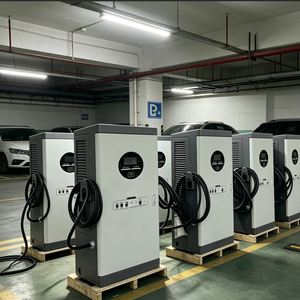
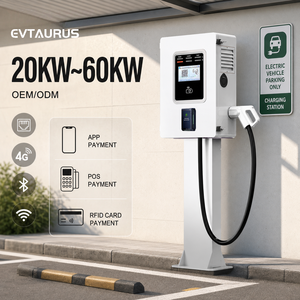
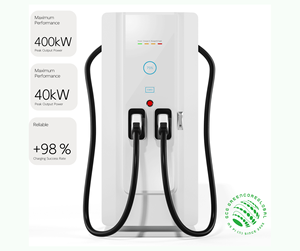
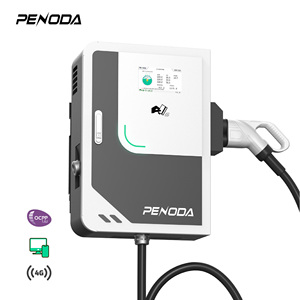
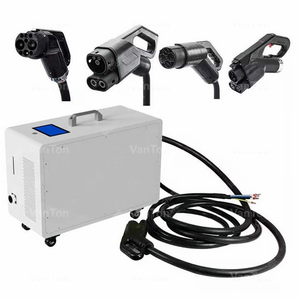
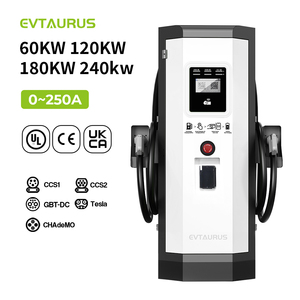
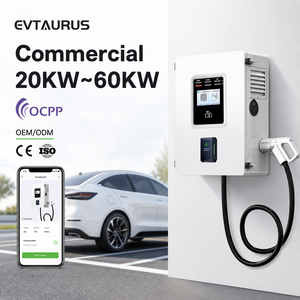
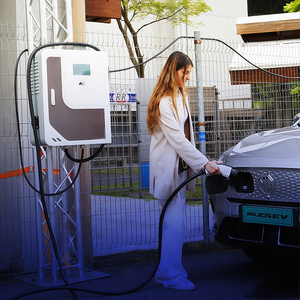
As a global pioneer in industrial power electronics, battery chargers, and DC/DC conversion technology, our manufacturing infrastructure combines 35+ years of high-reliability German design standards with scalable OEM contract manufacturing. We engineer specialized solutions designed for demanding environments—spanning vehicle assembly lines, automated logistics fleets, heavy transportation systems, and commercial fast-charging networks.
Every fast charger exported under our CE certification matrix undergoes 100% automated electrical end-of-line (EOL) verification via our internal DTS test platforms. From surface-mount technology (SMD) and through-hole technology (THT) PCB assembly to contact-cooled vacuum encapsulation, we control the complete manufacturing cycle under one roof.
"Complete in-house R&D, PCB assembly, potted encapsulation, and hardware/firmware co-design ensure our fast chargers meet zero-downtime industrial benchmarks."

Commercial EV chargers must perform continuously in harsh outdoor climates and electrically noisy industrial environments. Our hardware architecture integrates high-density planar magnetics and intelligent monitoring software.
Supporting wide output ranges (200V to 1000V DC), enabling full-speed charging for both conventional 400V EV architectures and modern 800V high-efficiency passenger/commercial vehicles.
Fully compliant with EN 61851-1, EN 61851-23, and IEC 61851-24 standards. Built with heavy-duty galvanic isolation to safeguard vehicle electronics and grid stability against voltage surges.
Seamless integration with global Charge Point Management Systems (CPMS). Supports automated remote telemetry, RFID authentication, POS payment gateways, and over-the-air (OTA) updates.
Hot-swappable power modules allow effortless capacity scaling from 30kW up to 240kW+. Built-in module-level fault tolerance guarantees uninterrupted charger availability.
Intelligent power management dynamically distributes available grid power across dual or multi-gun configurations, reducing transformer upgrade expenditures for site operators.
Robust IP54 / IP55 rated industrial housings engineered to withstand dust, moisture, salt fog, and extreme operating temperatures ranging from -30°C to +55°C without thermal throttling.
As international electrification transitions from early adopters to heavy commercial fleets, municipal transport networks, and highway mega-hubs, B2B procurement teams must look beyond initial hardware costs. Selecting an experienced fast charger exporter requires evaluating long-term total cost of ownership (TCO), grid interaction efficiency, and regulatory adaptability.
Next-generation electric vehicle platforms operate at high system voltages to achieve sub-15-minute charging windows. Exporters utilizing Silicon Carbide (SiC) power semiconductor modules achieve up to 97% energy conversion efficiency while reducing switching losses and physical module volume. B2B buyers are actively prioritizing SiC-enabled chargers due to significant reduction in operational electricity losses over a 10-year deployment lifecycle.
Seamless user experiences without manual RFID card scanning or smartphone apps are becoming standard requirement across European and North American markets. Compliance with ISO 15118 protocol enables cryptographically secure automated billing upon cable connection. Exporters integrating ISO 15118-compliant controller boards position operators for immediate compliance with upcoming public charging infrastructure mandates.
Fast chargers are evolving from static load points into active energy storage nodes. Vehicle-to-Grid (V2G) and Vehicle-to-Building (V2B) capabilities allow commercial fleet managers to discharge excess energy back to the grid during peak tariff hours, creating new monetization channels. Forward-thinking procurement strategies require bi-directional DC converter readiness built into charger control firmware.
While 120kW to 240kW stations satisfy current passenger cars and light commercial vehicles, heavy-duty electric trucks and buses demand charging capacities exceeding 1MW. Procurement specifications are rapidly shifting toward modular architectures that can bridge existing CCS2/GB-T standards while allowing plug-and-play upgrading to liquid-cooled Megawatt Charging System (MCS) connectors.
A structural comparison of traditional fast-charging architectures vs. advanced industrial power electronics exported by certified OEMs.
| Technical Vector | Legacy DC Chargers (Generation 1-2) | Industrial Next-Gen Chargers (CE Export Class) |
|---|---|---|
| Semiconductor Tech | Standard Silicon IGBTs (Lower switching frequency) | Silicon Carbide (SiC) MOSFETs (High efficiency & power density) |
| DC Output Range | 150V - 500V DC (Limited for 800V EV platforms) | 200V - 1000V Continuous Full-Range Auto-Matching |
| Thermal Management | Unfiltered forced-air cooling (High internal dust accumulation) | Isolated air-duct layout + optional liquid-cooled cable support |
| Network Protocols | Basic OCPP 1.5 / Proprietary serial links | OCPP 1.6J / OCPP 2.0.1 with TLS 1.3 Cybersecurity Protocols |
| Harmonic Distortion | THD > 5% (Higher grid stress & reactive power loss) | THD ≤ 3%, Power Factor ≥ 0.99 (Ultra-low grid impact) |
Essential technical, compliance, and custom engineering insights for importers, network operators, and OEM partners.
Our complete DC fast charger product line carries rigorous CE compliance verified by accredited third-party testing bodies. This includes full alignment with the Low Voltage Directive (LVD 2014/35/EU) under EN 61851-1 (Electric vehicle conductive charging systems - General requirements) and EN 61851-23 (DC electric vehicle supply equipment). Electromagnetic Compatibility (EMC Directive 2014/30/EU) is guaranteed under EN 61851-21-2 for industrial and residential electromagnetic environments, ensuring zero interference with surrounding telecommunications or grid infrastructure.
Yes. As a global exporter, we supply multi-standard dual and triple-connector charging systems tailored to your destination market. For instance, European configurations typically feature dual CCS2 plugs; North American variants utilize CCS1 or NACS; while Latin American and Asian markets frequently request combined CCS2 / GB/T / CHAdeMO triple-gun layouts. Built-in digital control units auto-detect the plug-in vehicle architecture and allocate dynamic voltage profile accordingly.
Dynamic Load Management utilizes an intelligent internal power matrix controller. When a single vehicle connects to a 120kW charger, the system channels 100% of available power modules to that single port. If a second vehicle plugs in, the controller automatically redistributes the modules (e.g., 60kW + 60kW or 80kW + 40kW) based on real-time Battery Management System (BMS) requests from each car, maximizing charging throughput without exceeding site grid limits.
Because development, PCB assembly, sheet metal fabrication, and testing take place in-house, we provide comprehensive OEM/ODM customization. This includes custom structural enclosure branding (powder coating colors, laser-etched logos), specialized UI touch-screen interface languages, integration of specific POS payment terminals (Nayax, Payter, Ingenico), customized cable lengths (up to 7.5 meters), and tailored firmware pre-configurations for private CPMS cloud backends.
Our industrial-grade chargers are designed for a minimum operating lifecycle of 10+ years under continuous commercial operation. Serviceability is streamlined through modular hot-swappable power modules, removable air filter grills, and remote diagnostics via OCPP. Standard preventative maintenance involves annual visual inspections, dust filter cleaning, and torque verification on main power contactors.
Our hardware utilizes isolated airflow corridors combined with heavy-duty thermal sensors integrated directly into the power electronics heatsinks. In freezing conditions down to -30°C, internal automatic de-icing preheaters keep sensitive display and control electronics warm prior to session initialization. In extreme heat up to +55°C, intelligent linear derating protects core power modules while maintaining continuous charging availability.
International buyers face significant supply chain vulnerabilities when sourcing complex power conversion equipment. As an integrated manufacturer and exporter, our organizational structure eliminates third-party component dependencies and delivers complete traceability.
Own proprietary control algorithms, power PCB designs, and CAN bus stack firmware. No reliance on off-the-shelf third-party mainboards guarantees absolute control over product lifecycles and quick engineering updates.
Equipped with high-precision SMT surface mount placement lines and THT through-hole soldering systems. Vacuum potted encapsulation guarantees component resistance against moisture, vibration, and thermal stress.
With an established international logistics footprint and technical support hubs spanning 40+ countries, we provide spare parts stocking, engineer training, and rapid warranty replacement globally.
Contact our application engineering team today for technical datasheets, full CE test reports, competitive direct-from-factory pricing, and OEM custom development proposals.
Inquire Now