
Engineered to rigorous international standards, our CE-certified charging infrastructure offers seamless protocol interoperability (OCPP 1.6/2.0.1, CCS1, CCS2, GB/T, CHAdeMO) with dynamic load distribution and modular power scalability.
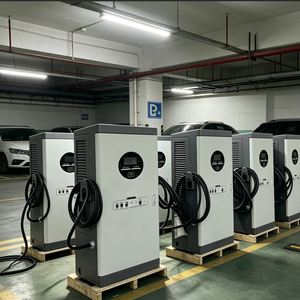
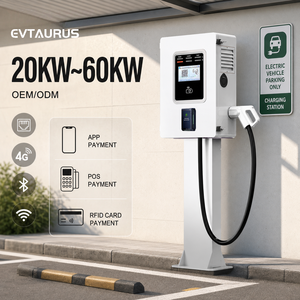
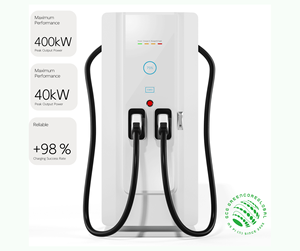
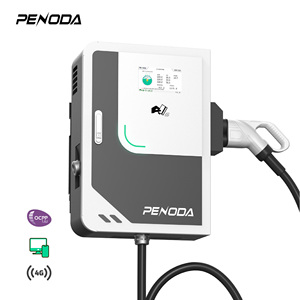
As an established technology partner and original equipment manufacturer (OEM/ODM), Deutronic Elektronik GmbH provides end-to-end industrial electronics development—from circuit topology design and embedded firmware engineering to fully automated high-volume production.

Deutronic stands as an industry benchmark in automotive and industrial battery charging hardware. Our customized charging computers ensure uninterrupted power supply throughout the complete product lifecycle—from vehicle manufacturing assembly lines and automated end-of-line (EOL) testing to dealership showrooms and heavy commercial service bays.

Designed specifically for commercial electric vehicles (e-buses, e-trucks), rail transportation, and off-highway machinery, our DVCx3 and DVCHx3 converter platforms leverage advanced planar magnetics to maximize power density within ultra-compact aluminum enclosures.

For automated guided vehicles (AGVs), autonomous mobile robots (AMRs), and warehouse conveyor systems, electrical equipment faces continuous physical shock, vibration, and dust ingress. Deutronic potted power supplies offer IP65/IP67 ingress protection through full thermal compound potting.

The D-Sinus controller family delivers pure sinusoidal current commutation for electric drives, fluid pumps, and industrial blowers. By eliminating harmonic torque ripple, motor efficiency is optimized while operational acoustic noise is drastically attenuated.

Combining customized hardware instrumentation with proprietary Deutronic DTS test software, we engineer manual, semi-automated, and fully robotic test benches that perform comprehensive dielectric, functional, and safety validations on manufactured electrical devices.

Under the DEUTRONICsystems division, we serve as an extended manufacturing arm for leading industrial OEMs. From Surface Mount Technology (SMT) and Through-Hole Technology (THT) automated assembly to potting, housing integration, and final functional burn-in, we deliver ready-to-sell systems under rigid quality control.
Selecting the optimal power conversion or charging system requires evaluating key electrical parameters, thermal topologies, and communication protocols. Compare our core system architectures below:
| System Platform | Input Voltage Range | Power Output Class | Cooling Topology | Communication Protocols | Key Target Application |
|---|---|---|---|---|---|
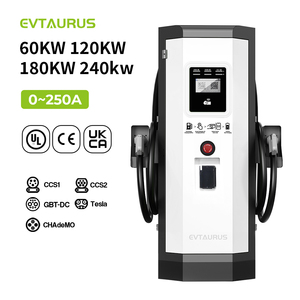
| High-Power DC Fast Charger | 380V - 480V AC 3-Phase | 30kW to 240kW Modular | Forced Air / Liquid Cooled | OCPP 1.6 J / 2.0.1, Ethernet, 4G | Public Commercial Hubs & Fleet Depots |
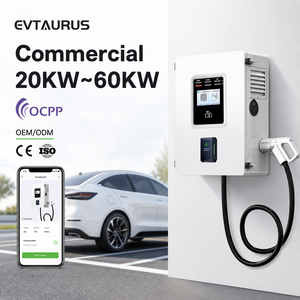
| Compact Wallbox DC Charger | 380V - 415V AC 3-Phase | 20kW / 30kW / 40kW | Internal Low-Noise Airflow | OCPP 1.6, RFID, Wi-Fi, RS485 | Commercial Garages, Fleet Workplaces |
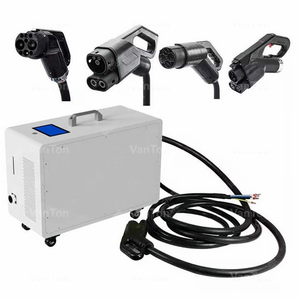
| Mobile CCS2 Fast Charger | 400V AC 3-Phase (Portable) | 15kW to 20kW Movable | Convection / Force Air | CAN Bus, Integrated App Interface | Vehicle Maintenance & Emergency Service |
| High-Voltage DVCx3 Converter | 200V to 900V DC High Input | 500W to 5kW Units | Aluminum Contact Plate Cooling | CANopen, SAE J1939 Protocol | Electric Buses, Mining Vehicles, Rail |
| Potted Industrial PSU | 90V to 264V AC Universal | 100W to 1.5kW Sealed | Full Vacuum Resin Encapsulation | Analog Feedback, Industrial I/O | AGVs, AMRs, Outdoor Intralogistics |
The global industrial power electronics market is undergoing a seismic shift driven by decarbonization mandates, vehicle electrification, and smart-grid integration. B2B procurement teams must align with technical suppliers capable of anticipating these four major trends:
Modern fast-charging modules and high-voltage DC/DC converters are rapidly transitioning from legacy Silicon MOSFETs to Silicon Carbide (SiC) switches. SiC technology lowers switching losses by up to 60%, enables operational switching frequencies above 100 kHz, and permits 96%+ peak conversion efficiencies—reducing cooling mass and housing volume.
Next-generation charging infrastructure mandates bidirectional power flow (ISO 15118-20 standard compliance). Commercial chargers no longer merely consume grid energy; they function as active distributed energy resources (DERs), allowing commercial EV fleets to supply peak-shaving power back to microgrids during high-demand windows.
With heavy-duty commercial EVs moving from 400V to 800V/900V battery architectures to enable megawatt charging speeds, custom power electronics suppliers must deliver ultra-wide output voltage ranges (150V DC to 1000V DC) without compromising power factor correction (PFC > 0.99) or low total harmonic distortion (THD < 5%).
Fixed power distribution per charging gun leads to grid inefficiency. Contemporary multi-gun DC charging hubs incorporate matrix switching modules controlled by AI load management software, dynamically shifting power modules in 20kW/30kW increments to match the exact real-time state of charge (SoC) demand of each connected vehicle.
In high-power electronics manufacturing, compliance with European Conformity (CE) guidelines is not merely a legal stamp—it is a rigorous validation of electrical safety, thermal isolation, and electromagnetic immunity under real-world industrial stress.
Every industrial converter, charger, and power supply engineered in our custom electronics facility is rigorously certified against the mandatory directives of the European Union:
Industrial deployment environments subject custom power electronics to severe environmental contaminants including conductive metallic dust, continuous vibration, high humidity, and extreme thermal cycling. Our factory utilizes engineered polyurethane and silicone potting encapsulation to achieve complete environmental immunity.
By vacuum-impregnating magnetic components (chokes, high-frequency planar transformers), thermal conductivity between internal semiconductors and aluminum heat-sink baseplates is maximized—reducing hot-spot thermal resistance ($\theta_{jc}$) by over 40% while delivering true IP65 ingress sealing.
Direct answers to critical questions evaluated by technical procurement officers, system integrators, and OEM engineering leads during supplier selection.
Our in-house design, PCB assembly (SMD/THT), potting, and metal fabrication facilities allow full modification capabilities. We adapt input/output voltage windows, custom charge profile curves (lithium, lead-acid, solid-state), mechanical enclosure dimensions, branding aesthetics, thermal heat dissipation geometry, and communication protocols (CAN, J1939, Modbus, OCPP 1.6/2.0.1).
Our DC/DC converter platforms cover standard low-voltage inputs (12V/24V/48V DC) via the DVCx3 series, and high-voltage inputs (up to 900V DC) via the DVCHx3 series. Commercial DC fast chargers accept 3-phase 380V–480V AC input, while smaller wallbox units offer flexible single-phase or three-phase options tailored to global grid standards.
Yes. Deutronic charging computers are explicitly engineered for end-of-line vehicle production facilities. Featuring the proprietary DC-Connect network system, charging parameters, diagnostics, and battery health telemetry are logged centrally in real-time, matching batch vehicle chassis numbers for complete quality assurance documentation.
Every single manufactured unit undergoes 100% End-of-Line (EOL) functional automated testing via our proprietary DTS software platform, high-potential (Hi-Pot) insulation breakdown testing, full thermal burn-in, and Automated Optical Inspection (AOI) during PCB assembly to ensure zero-defect delivery.
Because development, firmware programming, surface-mount assembly, potting, and final validation occur under one single corporate roof in Germany, custom hardware and firmware adaptations remain economically viable even for specialized small and medium production batches.
We maintain an extensive international service infrastructure spanning over 40 countries, including dedicated hubs such as Deutronic USA (Duncan, SC). Spare parts provisioning, regional technical support, field commissioning, and factory repair services are available close to your operational facilities worldwide.
Consult with our lead power system engineers to review your custom voltage requirements, enclosure constraints, protocol parameters, or volume production schedules.