
Explore our CE-certified, industrial-grade custom assemblies designed for commercial EV fleets, automated production lines, and demanding energy systems.
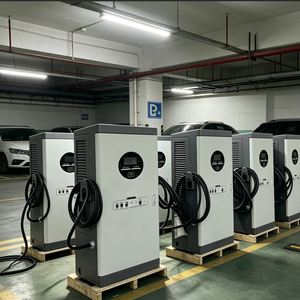
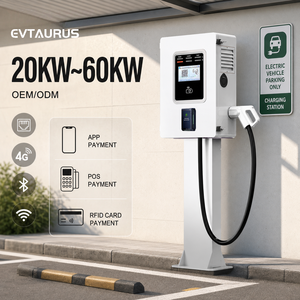
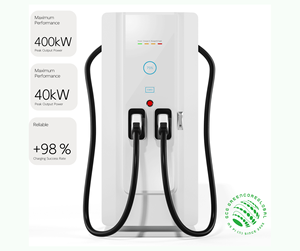
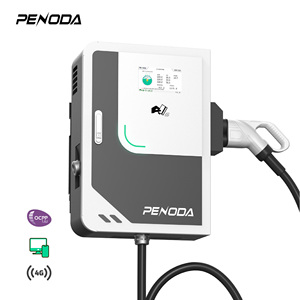
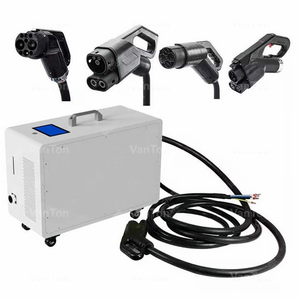
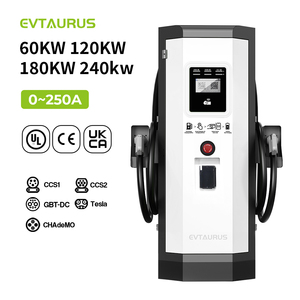
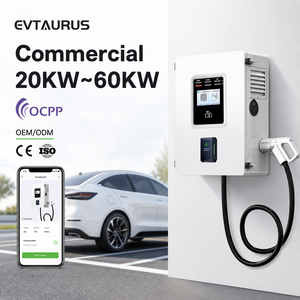

In the rapidly evolving global marketplace for industrial power conversion, commercial electric vehicle (EV) charging infrastructures, and automated end-of-line (EOL) test systems, enterprise buyers face rigorous engineering demands. Selecting a CE Certified Custom Assembly Manufacturer & Exporter requires far more than comparing basic datasheets; it demands a deep evaluation of thermal topology, galvanic isolation, firmware flexibility, and strict regulatory compliance.
As a global leader in power electronics engineering with over 35 years of industrial track record, our manufacturing facilities integrate full lifecycle production under one roof. From surface-mount technology (SMD) and through-hole technology (THT) printed circuit board assembly to heavy-duty potted power modules and high-power DC charging stations, we deliver scalable turnkey hardware optimized for harsh operating environments.
Information Gain Insight: Modern enterprise procurement mandates modular design structures capable of handling high DC voltages (up to 900V) while offering native support for industrial communications protocols such as CAN Bus, SAE J1939, and OCPP 1.6J / 2.0.1. Our custom assembly pipelines guarantee complete traceability from component-level SMT placement to final automated end-of-line stress testing.
Our OEM/ODM manufacturing framework is structured to eliminate multi-vendor friction, providing global enterprise customers with an agile, high-precision supply chain. Our operations cover four core technical pillars:
State-of-the-art pick-and-place lines supporting dense SMD layouts, fine-pitch ICs, and heavy copper THT components for industrial power electronics.
Advanced planar transformer designs and potted housings ensuring dust, moisture, and shock isolation without requiring noisy or failure-prone liquid cooling systems.
Proprietary DTS test software and automated test benches verifying full functional safety, load tolerance, and thermal boundaries before factory release.
To assist technical directors, procurement officers, and system integrators in specifying the optimal custom power or charging solution, the table below outlines core operational parameters across our flagship assembly categories:
| Product Category | Voltage / Power Range | Ingress & Thermal Rating | Communication Protocols | Compliance & Certification |
|---|---|---|---|---|
| Commercial Fast DC Chargers | 15kW to 240kW (400V / 800V Architecture) | IP55 / IP65 NEMA 3R Outdoor Grade | OCPP 1.6J / 2.0.1, Ethernet, 4G, RS485 | CE, IEC 61851, ISO 15118, DIN 70121 |
| High-Voltage DC/DC Converters | Input: 200V - 900V DC | Output: 12V / 24V / 48V | IP67 Contact Cooled (-40°C to +85°C) | CAN Bus 2.0B, SAE J1939, LIN | CE, E-Mark, EN 50155 (Railway Standard) |
| Potted Industrial Power Supplies | 100W to 5kW Cabinet / Decentralized | Fully Encapsulated IP67 Vibration-Proof | Modbus RTU, Analog 0-10V, Relay Alarm | CE, UL 61010, EN 60950-1 |
| Sinusoidal Motor Controllers | 3-Phase 24V - 96V DC Brushless Drive | Integrated Aluminum Heatsink IP65 | CANopen, PWM Control, Quadrature Encoder | CE, ISO 13849 Functional Safety |

Our global manufacturing hubs maintain full control over board-level design, firmware development, mechanical housing fabrication, and high-pot isolation testing. By maintaining strict German engineering quality standards across our production lines, we reduce engineering iteration loops and ensure seamless scaling from prototype runs to multi-thousand-unit serial production.
Whether you require custom DC fast charging hardware with dynamic power allocation or ruggedized DC/DC converters for heavy duty off-highway vehicles, our engineers work directly with your procurement teams to meet exacting mechanical and electrical tolerances.
As industrial automation, logistics electrification, and commercial vehicle fleets transition toward zero-emission power structures, procurement strategies must account for rapid technological shifts. Navigating the next decade of power electronics requires understanding four pivotal market vectors:
Commercial mobility is rapidly migrating from standard 400V bus systems to high-voltage 800V and 900V topologies. Higher operating voltages significantly reduce I²R conductive losses, enable thinner wire harness cross-sections, and dramatically shrink EV battery recharge times. Custom assembly manufacturers must utilize advanced Wide Bandgap (WBG) semiconductors—specifically Silicon Carbide (SiC) and Gallium Nitride (GaN)—to maintain high switching efficiency (>97%) under extreme thermal stress.
Next-generation DC EV charging stations are shifting away from rigid power allocation. Modern commercial depots demand dynamic load balancing where power modules automatically route kilowatt capacity to vehicle ports based on real-time State of Charge (SoC). Furthermore, compliance with ISO 15118-20 enables bi-directional Vehicle-to-Grid (V2G) power transfer, transforming EV fleets into decentralized energy storage assets that inject power back into local microgrids during peak demand hours.
As product complexity scales, manual quality assurance creates unacceptable bottlenecks. Global OEMs now require continuous automated testing integrated directly into the assembly line. Utilizing our modular DTS test software platform, power electronics assemblies undergo real-time parameterization, functional validation, and automated diagnostic report creation prior to packaging, guaranteeing 100% first-pass yield reliability.
Industrial logistics, AGVs, and railway applications operate in dusty, humid, and high-vibration environments. Conventional forced-air fans represent a primary failure point in power supplies. The procurement market is increasingly shifting toward contact-cooled, vacuum-potted enclosures that dissipate heat directly through the vehicle chassis, achieving IP67 ratings and extending Mean Time Between Failures (MTBF) beyond 100,000 operational hours.

For strategic sourcing directors and B2B buyers, purchasing power electronics and custom assemblies involves balancing total cost of ownership (TCO), regulatory risk, and supply chain continuity. Below are key trends shaping enterprise procurement decisions:
Leading buyers are moving away from fragmented supply chains. Partnering with a manufacturer that delivers complete hardware development, PCB SMT, software parameterization, and after-sales support mitigates vendor friction and clarifies liability.
Non-compliant power devices introduce heavy harmonic distortion into factory grids. Verified CE certification, coupled with rigorous EN 61000-6-2 and EN 61000-6-4 EMC testing, ensures seamless integration into sensitive industrial environments.
Long-term operational availability requires localized technical support. With dedicated service nodes operating across 40+ countries, enterprise customers receive rapid field diagnostic support, spare parts availability, and routine firmware updates.
Selecting our CE-certified manufacturing framework grants your organization direct access to industrial power expertise refined over decades of real-world deployment:
All our products are CE certified and engineered in compliance with international standards, including IEC 61851 for EV charging systems, ISO 15118 for vehicle communication, UL 61010 for industrial power supplies, and EN 50155 for railway power conversion. Complete compliance documentation and test reports are provided upon project execution.
Yes. Our DVCx3 and DVCHx3 series support wide input ranges up to 900V DC. Our engineering team routinely customizes input/output transformation ratios, galvanic isolation boundaries, mounting plate dimensions, and custom CAN Bus messaging protocols for specialized vehicle platforms.
Our commercial fast chargers feature multi-connector support including CCS1, CCS2, CHAdeMO, and GB/T standard guns. Integrated smart controllers execute automatic handshakes over DIN 70121 and ISO 15118 protocols, adjusting voltage and current profiles dynamically based on the vehicle’s BMS requirements.
Because R&D, SMT line scheduling, potting, and EOL automated testing are handled internally, rapid prototyping can typically be delivered within 4 to 6 weeks, with full serial production runs scaling smoothly based on scheduled customer demand.
Absolutely. Our chargers natively incorporate OCPP 1.6J (upgradable to OCPP 2.0.1) JSON web socket interfaces. This allows seamless connection to third-party CSMS platforms, RFID authentication systems, mobile app billing, and local DLM master units for smart grid load balancing.
Consult directly with our senior application engineers to specify your custom assembly, high-voltage converter, or DC fast charging requirement today.