
Explore our core CE-marked hardware platforms designed for assembly lines, commercial fleets, and industrial power distribution.
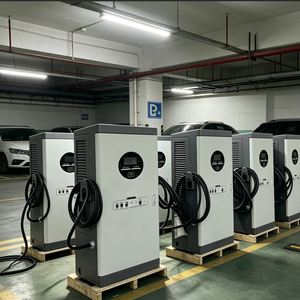
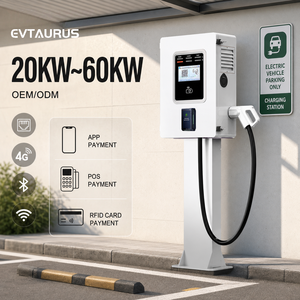
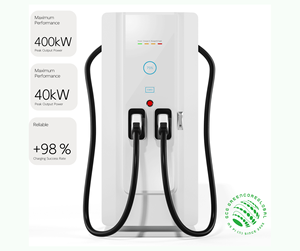
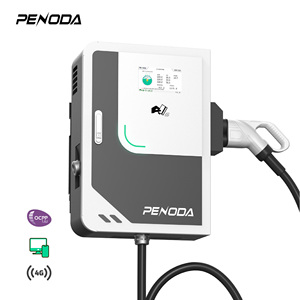
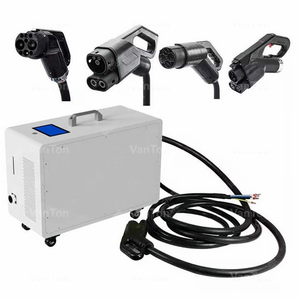
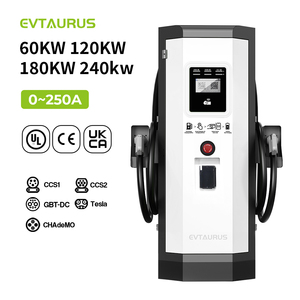
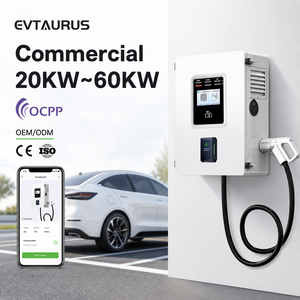
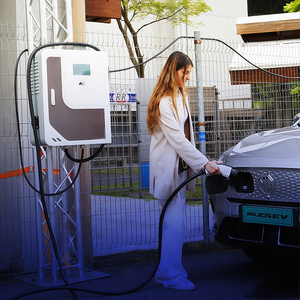
The global transition toward electrification across automotive, intralogistics, and heavy industrial transportation has placed unprecedented demands on contract electronics manufacturers (CEMs) and specialized power electronics suppliers. Modern high-power direct current (DC) EV charging stations operating from 30kW to 240kW, along with high-voltage onboard DC/DC converters operating up to 900 V DC, require print circuit board assemblies (PCBAs) engineered to withstand high thermal flux, severe electromagnetic interference (EMI), dynamic switching stress, and continuous heavy-duty duty cycles.
Procurement directors and chief technology officers evaluating CE certified circuit board factories & suppliers must look beyond basic SMT capability. True regulatory compliance under European Economic Area standards demands comprehensive conformity with the Low Voltage Directive (LVD 2014/35/EU), Electromagnetic Compatibility Directive (EMC 2014/30/EU), Radio Equipment Directive (RED 2014/53/EU), and Restriction of Hazardous Substances (RoHS 2011/65/EU). Achieving these standards at high voltage requires deep expertise in dielectric isolation barriers, planar magnetics design, thick-copper PCB stackups, and automated end-of-line (EOL) functional verification.
Industrial power conversion requires multi-layered hardware engineering. By combining Surface Mount Technology (SMT) for ultra-dense digital signal controllers with Through-Hole Technology (THT) for high-mass magnetics and filter capacitors, certified factories build power blocks capable of long lifecycle endurance.
Utilizing 3oz to 6oz inner and outer copper layers to transmit high DC currents with minimal resistive $I^2R$ loss. Designed with thermal vias arranged in matrix arrays to sink thermal energy away from SiC MOSFETs directly into chassis heat exchangers.
Replacing bulky wire-wound inductors with multi-layer printed planar transformers integrated directly into the circuit board layers. This achieves ultra-low leakage inductance, superior heat dissipation, and reduced Z-height packaging.
Reinforced insulation barriers capable of withstanding >4kV dielectric withstand tests. Fully potted polyurethane or silicone encapsulations protect power PCBs from aggressive atmospheres, vibration, and dust in AGVs and railway rolling stock.
When auditing potential circuit board suppliers, engineering teams must evaluate physical manufacturing capabilities against strict compliance parameters. Below is a comparative technical specification matrix for industrial and e-mobility class circuit board assemblies:
| Engineering Parameter | Commercial EV Chargers (15kW–60kW) | High-Power DC Stations (80kW–240kW) | Sub-System DC/DC Converters (900V) |
|---|---|---|---|
| Target Input / Operating Voltage | 400V AC 3-Phase ±15% | 400V–480V AC 3-Phase Grid | 200V DC to 900V DC Wide Input |
| PCB Layer Count & Copper Weight | 4 to 8 Layers / 2oz - 3oz Cu | 6 to 12 Layers / 4oz - 6oz Cu | 6 to 10 Layers / Heavy Copper + MCPCB |
| Power Semiconductor Topology | Silicon IGBT / SiC MOSFET hybrid | Full SiC (Silicon Carbide) Parallel Modules | Wide-Bandgap GaN / SiC Switches |
| Control & Bus Communication | CAN Bus 2.0B / RS485 / Ethernet | Dual Isolated CAN / SAE J1939 / OCPP 2.0.1 | Galvanically Isolated CAN / SAE J1939 |
| Dielectric Isolation Rating | 2.5 kV AC / 1 Minute | 3.75 kV AC / 1 Minute | 4.2 kV DC Isolation Barrier |
| CE Certification Directives | EN 61851-1, LVD, EMC Class A | EN 61851-23/24, LVD, EMC Class A | EN 50155 (Rail), ISO 26262 ASIL-D Compliant |
| Cooling & Thermal Management | Forced Air / Aluminum Heatsink | Liquid Cooling / Closed Loop Radiator | Contact Cooling / Cold-Plate Mounting |
Building high-reliability industrial power electronics demands complete end-to-end control over the lifecycle—from concept phase and schematic capture to automated assembly, potting, and final validation. Leveraging over 35 years of specialized German power-electronics heritage, our integrated manufacturing framework (Deutronic Systems) combines mid-sized manufacturing agility with Tier-1 industrial quality controls.

Deutronic is a recognized global technology leader in intelligent charging computers deployed directly on automotive assembly lines, end-of-line (EOL) flash stations, and service workshops. Circuit boards powering these units are built to withstand heavy RF interference, fluctuating mains voltage, and continuous 24/7 continuous operation.
Our flagship DVCx3 and DVCHx3 converter board platforms process input voltages up to 900V DC, converting high-voltage battery traction power into stable auxiliary 12V or 24V supply rails for commercial EVs, specialized agricultural machinery, and rail platforms.


Designed for logistics hubs, automated guided vehicles (AGVs), and control cabinets exposed to intense mechanical shock, dust, and humidity. Our potted power supply boards are sealed inside rugged enclosures to ensure operational longevity.
The D-Sinus family of motor control circuit boards regulates motor drive currents into a pure sine waveform. This advanced switching strategy reduces torque ripple to near zero, substantially lowers acoustic noise emissions, and optimizes motor efficiency in mobile pumps, cooling fans, and electric propulsion systems.


Zero-defect manufacturing mandates total test automation. We engineer bespoke end-of-line (EOL) electrical test rigs integrated with our proprietary DTS (Deutronic Test System) software suite, enabling complete multi-variant functional testing before shipment.
Beyond standard product lines, DEUTRONICsystems operates as a full-service contract development and manufacturing partner for OEM device manufacturers worldwide. From single PCB assemblies to complex mechatronic sub-systems and finished white-label devices, our automated manufacturing lines guarantee strict CE and ISO quality standard execution.

As global supply chains realign and technical standards evolve, procurement leaders must anticipate key technological shifts affecting CE-certified circuit board manufacturing and power electronics sourcing. Navigating the upcoming decade requires aligning with suppliers who invest in the following core technological vectors:
The industry wide migration from 400V battery architectures to 800V/1000V platforms demands higher switching frequencies enabled by Silicon Carbide (SiC) switches. Circuit board factories must master ultra-low inductance PCB layout techniques to minimize voltage overshoot spikes and electromagnetic interference during nanosecond switching transitions.
European regulatory frameworks increasingly require a "Digital Product Passport" (DPP). Modern CE certified board suppliers embed unique serialized QR metrics on each board, logging every SMT component batch, reflow profile temperature log, and DTS end-of-line test result directly into secure cloud databases via protocols such as DC-Connect.
EV chargers are evolving from passive energy loads into active grid stabilizers (Vehicle-to-Grid / V2G). Circuit board controllers must integrate dual-direction power conversion firmware, support ISO 15118-20 Plug & Charge protocols, and run secure OCPP 2.0.1 stacks directly on hardware microcontrollers.
Here are direct technical answers to the most common questions asked by procurement directors, quality auditors, and chief system engineers when evaluating board manufacturing partners:
Looking for a custom OEM/ODM power architecture, high-voltage DC/DC converter module, or turnkey PCB contract manufacturing partner? Consult with our senior application engineering team to review your technical specification.
Send an Inquiry