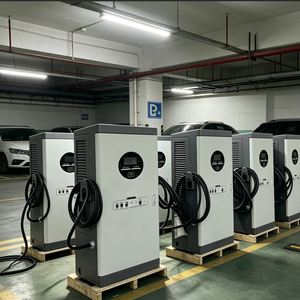
Explore our industrial-grade, CE-certified DC charging platforms and auxiliary supply modules engineered for continuous high-duty operating environments.
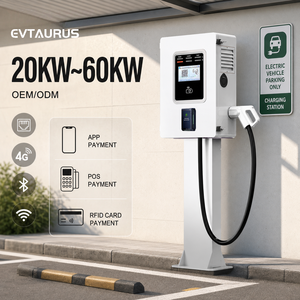
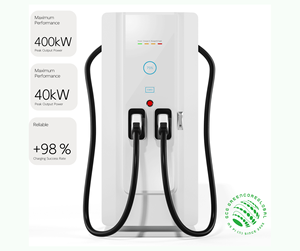
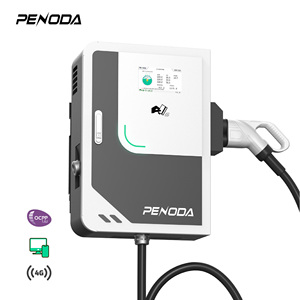
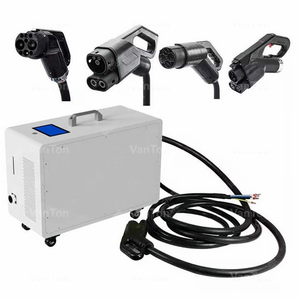
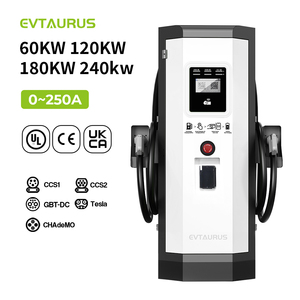
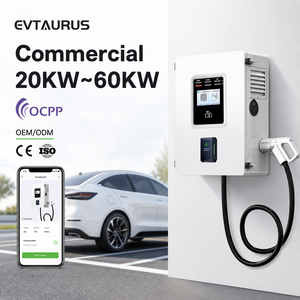
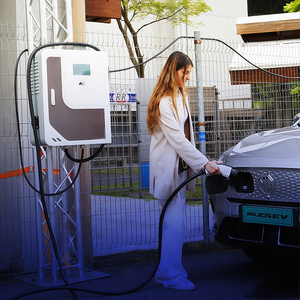
A comprehensive examination of electrical safety, thermal dissipation topology, and compliance frameworks for global industrial electrification.
Auxiliary Power Supplies (APS) and DC conversion systems represent the operational core of heavy industrial equipment, electric vehicle infrastructure, and rolling stock. Operating as the secondary power backbone, these systems stepped down high DC bus voltages (up to 900V DC) to stable low-voltage DC buses (typically 12V, 24V, or 48V DC) required to energize control units, sensors, cooling pumps, and contactors.
As a leading CE Certified Auxiliary Supply Manufacturer, our design philosophy prioritizes planar magnetic topologies paired with Silicon Carbide (SiC) semiconductor switches. This integration yields remarkable energy conversion efficiency (>96.5%), drastically reducing internal thermal losses while achieving industry-leading volumetric power density.

Compare standard baseline characteristics across our enterprise industrial conversion and auxiliary charging platforms.
| Specification Parameter | DVC Series (Low Voltage) | DVCH High-Voltage Auxiliary | Industrial Fast Charger Modules |
|---|---|---|---|
| Nominal Input Voltage Range | 24 VDC - 110 VDC | 200 VDC - 900 VDC | 400 VAC ±15% (3-Phase) |
| Output Voltage Options | 12V / 24V DC (Regulated) | 24V DC / 48V DC System Bus | 150 VDC - 1000 VDC (Wide Dynamic) |
| Cooling Methodology | Contact Cooling / Conduction | Direct Cold-Plate Contact | Forced Air / Intelligent Fluid Cooling |
| Communication Protocols | CANbus 2.0B / SAE J1939 | CANopen / Ethernet / Modbus TCP | OCPP 1.6J / OCPP 2.0.1 / POS / App |
| Enclosure Protection Class | IP67 / IP6K9K Fully Potted | IP65 Heavy Aluminum Die-Cast | IP54 / IP55 Outdoor NEMA 3R |
| Compliance Certification | CE, ECE R10, EN 50155 | CE, UL 2202, ISO 26262 ASIL-B | CE, IEC 61851-1/23, CHAdeMO, CCS |
Combining 35+ years of German power electronics engineering with complete in-house manufacturing, from PCB assembly to automated test validation.
We execute hardware design, control firmware development, THT/SMD PCB assembly, polyurethane potting, and final automated testing under one unified manufacturing roof. This minimizes supply chain latency and ensures uncompromised trace-ability.
Eliminate failure-prone cooling fans in hostile dust, moisture, and chemical environments. Our planar transformer designs transfer thermal losses directly to the chassis wall or liquid cooling plates, permitting sealed IP67 enclosures.
Integrated microcontrollers perform real-time monitoring of input transient surges, thermal stress, and internal ripple voltage. System logs and operational diagnostics seamlessly communicate over CANbus or cloud systems via DC-Connect software integration.

For specialized OEM requirements, standard off-the-shelf power supplies are often insufficient. Through our DEUTRONICsystems business unit, we provide tailored engineering modification services for small, medium, and large series production runs.
Our capabilities encompass complete mechatronic product assembly, complex THT and SMD surface mount placement, vacuum potting for severe vibration environments (up to 10G shock ratings), and custom end-of-line test station programming driven by our proprietary DTS software.
Consult EngineersKey technological shifts procurement teams and engineering leads must navigate when sourcing auxiliary systems for the next decade of electrification.
Industrial fleets, heavy machinery, and EV charging platforms are accelerating the shift from 400V to 800V/900V nominal architectures to reduce cable copper weight and enable ultra-fast charging. Auxiliary supply units must feature wide-band gap input voltage regulation without sacrificing low-load conversion efficiency.
Legacy silicon MOSFET topologies are reaching physical thermal and switching limits. Modern procurement specifications increasingly stipulate Wide Bandgap (WBG) semiconductors to shrink magnetics volume, lower heat dissipation, and reduce total cost of ownership (TCO) over extended device lifecycles.
Unplanned industrial downtime costs thousands of dollars per hour. Procurement managers now demand auxiliary supply platforms with native CANbus (SAE J1939 / CANopen) interfaces that report internal temperature metrics, capacitor health degradation, and voltage ripple indicators directly to central SCADA systems.
The boundary between stationary charging infrastructure and onboard auxiliary power conversion is rapidly blurring. Modern commercial electric vehicles (CEVs), automated guided vehicles (AGVs), and battery energy storage systems (BESS) require bi-directional power flow, dynamic load management, and standardized communication interfaces (such as ISO 15118 and OCPP 2.0.1).
As a certified manufacturer, our engineering roadmap focuses on modular, bi-directional auxiliary converters that allow battery energy to support auxiliary vehicle loads during peak demand, while maintaining full galvanic isolation and compliance with strict functional safety standards (ISO 26262).
Clear, direct answers regarding certifications, thermal management, customization, and deployment options.
Our CE-certified auxiliary supplies fully meet Low Voltage Directive (LVD) 2014/35/EU, EMC Directive 2014/30/EU, and RoHS Directive 2011/65/EU. Specific product families comply with EN 62368-1 for audio/video/IT/communication equipment, IEC 61851 for EV charging systems, and EN 50155 for railway electronic equipment.
Contact-cooled power units transfer heat via conduction directly through a specialized aluminum baseplate to the equipment frame or liquid cooling plate. Unlike fan-cooled units, contact-cooled supplies feature fully sealed IP67 enclosures that prevent ingress of conductive dust, oil mist, humidity, and atmospheric pollutants, drastically increasing mean time between failures (MTBF).
Yes. The high-voltage DVCH series is engineered specifically to accept wide DC input ranges up to 900V DC continuous, absorbing switching surges and battery voltage swings while supplying a tightly regulated 12V, 24V, or 48V auxiliary bus.
Because all firmware, magnetics, and PCB design occur in-house, we readily support OEM customization. This includes custom charge profiles for various lithium (LiFePO4, NMC) and lead-acid chemistries, tailored CANbus object dictionaries, and custom mechanical mounting brackets even for medium series volumes.
Our CANbus-enabled auxiliary supplies broadcast dynamic system parameters including actual input/output voltage, current levels, internal heat sink temperatures, operating state flags, and specific diagnostic fault bits (e.g., over-voltage, thermal derating, short-circuit shutdown).
Every single unit undergoes automated end-of-line (EOL) testing utilizing our proprietary DTS test station technology. Testing includes full-load burn-in, high-potential (Hi-Pot) galvanic isolation checks, functional boundary testing, and complete serial number data logging for total lifecycle traceability.
Partner with an established German power electronics leader. Contact our technical sales team to evaluate your input parameters, physical envelope constraints, and target delivery timelines.
Get a Quote