Choosing a Potted Power Supply for Logistics is not just a matter of matching voltage and wattage. A unit may sit inside a barcode scanner, vehicle terminal, conveyor controller, or outdoor tracking device. Each setting brings different demands. A warehouse cart can shake over floor joints, while a loading bay may face dust, moisture, and sharp temperature changes. Details matter.
Start with the equipment’s actual input range, required output, peak load, and available mounting space. Then check the encapsulation material, operating temperature range, isolation, and protection ratings. A sealed case can help resist moisture and vibration, but potting alone does not guarantee suitability. Heat still needs a path out, especially inside a compact enclosure running through long shifts. A datasheet is useful. Real operating conditions matter more.
Ask suppliers for test data relevant to vibration, thermal cycling, and humidity, and confirm that the power supply meets the equipment maker’s requirements. Review efficiency and derating at the expected ambient temperature, not only at room temperature. Compare service life, warranty terms, and technical support as well as purchase price. A cheaper model may cost more if it causes repeat maintenance visits. There is no perfect unit. Some trade-offs remain, and they deserve a closer look. Before choosing, map the device’s location, duty cycle, and likely failure points. Those practical details make it easier to select a Potted Power Supply for Logistics that performs reliably in daily operations.
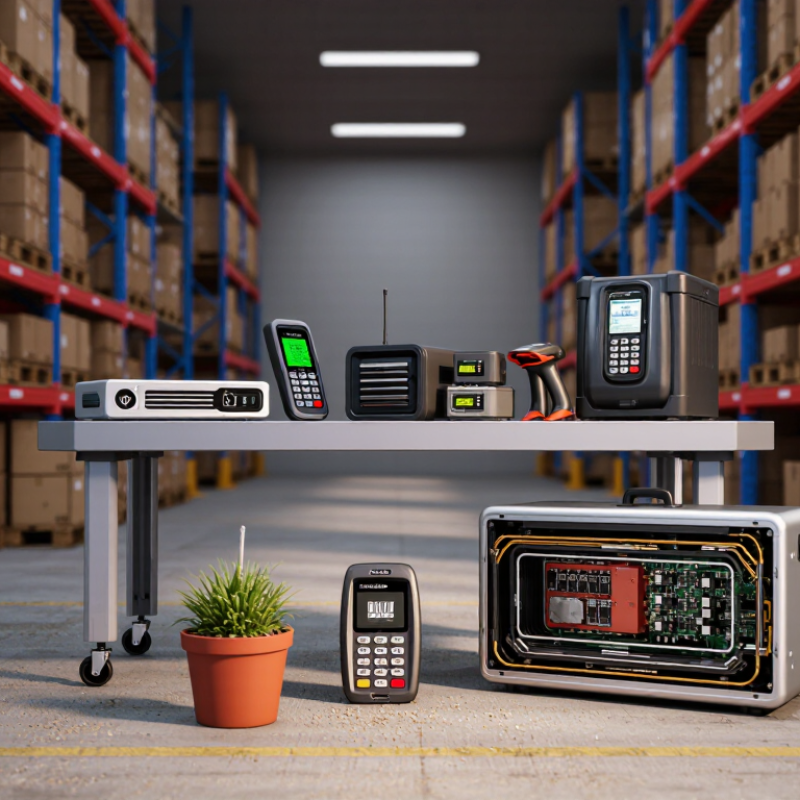
Identify the Power Requirements of Logistics Equipment
Start with the equipment nameplate, not the power supply catalogue. Record voltage, continuous current, peak current, and duty cycle for scanners, sensors, control cabinets, and conveyor motors. Peak loads matter. Motors and solenoids can draw brief surges at startup, while several devices may switch on together. Calculate the combined load, then allow suitable headroom. A steady 24-volt reading does not prove a supply can handle a sudden current spike.
The MHI 2024 Annual Industry Report found that 55% of surveyed supply-chain professionals planned to increase technology investment over the following five years. More automation can mean more varied electrical loads, so list each device separately before sizing a potted supply. The IEA’s Global EV Outlook 2024 reported nearly 54,000 electric truck sales worldwide in 2023. That figure does not specify warehouse charging demand, but it signals why charging equipment may need separate load planning from low-voltage controls.
Check the site conditions too. A sealed, potted unit can resist dust and moisture, yet encapsulation may make heat dissipation harder. Compare its derated output with the enclosure’s real temperature, not just a cool-room rating. Even a careful worksheet can miss a simultaneous startup. Measure operating current during a busy shift, and verify the result against manufacturer specifications before installation.
How to Choose a Potted Power Supply for Logistics?
Match Input Voltage, Output Voltage, and Load Capacity
A logistics power supply must fit the actual electrical conditions, not just the equipment label. Check the site’s AC input range and frequency, including voltage dips when conveyors or motors start. Then match the supply’s DC output to the controller, scanner, or sensor. A 24-volt device needs a stable 24-volt output; a small mismatch can cause resets or shorten component life.
Load capacity needs more than a sum of nameplate currents. Measure or estimate normal demand, startup peaks, and simultaneous loads, then check the supply’s derating curve at the real enclosure temperature. MHI’s 2024 Annual Industry Report found that 55% of respondents planned to increase supply-chain technology investment. More automation means more attention to reliable power. Still, a generous rating alone is not enough. Check peak-current capability, output ripple, and protection features.
Potted units resist dust and vibration, useful near warehouse conveyors and mobile handling equipment. But potting can make heat harder to dissipate and repairs impractical. The CSCMP 2024 State of Logistics Report put U.S. logistics costs at $2.3 trillion, or 8.7% of GDP, in 2023—a reminder that downtime has real operational weight. Test the selected unit under the actual load and temperature. A spreadsheet can miss a brief inrush. Sometimes it does.
| Logistics Application | Input Voltage to Match | Required Output | Estimated Load | Suggested Rated Capacity | Selection Notes |
|---|---|---|---|---|---|
| Barcode scanner or compact terminal | 100–240 VAC mains, if supported by the supply | 5 VDC | 2 A (10 W) | At least 15 W; approximately 3 A at 5 V | Allow headroom above the normal load and confirm the device’s permitted voltage range and connector polarity. |
| Warehouse sensor or small edge gateway | 100–240 VAC mains, if supported by the supply | 12 VDC | 1.5 A (18 W) | At least 25 W; approximately 2.1 A at 12 V | Check the combined load if several sensors or communication modules share one supply. |
| PLC with field sensors and control devices | 100–240 VAC mains, if supported by the supply | 24 VDC | 3 A (72 W) | At least 90 W; a 100 W unit provides additional margin | Include the current drawn by connected relays, sensors, and other 24 VDC devices in the load estimate. |
| Industrial network or communications equipment | 100–240 VAC mains, if supported by the supply | 48 VDC | 1.25 A (60 W) | At least 75 W; approximately 1.6 A at 48 V | Verify that the equipment accepts the supply’s actual output-voltage tolerance, not just its nominal voltage. |
| Equipment powered from a vehicle or battery system | Match the actual DC source, such as 12 VDC or 24 VDC | As required by the connected equipment | Calculate from the equipment’s rated voltage and current | Choose a DC-input potted converter rated above the calculated load | Do not connect a DC source to an AC-input-only model. Check the converter’s full input range and transient limits. |
Capacity check: Load power (W) = output voltage (V) × load current (A). A practical starting point is to select a supply rated about 20–30% above the continuous calculated load, then verify temperature derating, startup or inrush demand, and the manufacturer’s datasheet limits. Confirm that the potted unit’s operating temperature, mounting, and protection ratings suit the installation environment.
Start with the route, not the catalog. A power supply mounted on a warehouse conveyor may face dust, vibration, and warm air from nearby motors. A unit installed on a loading dock may also encounter rain, cold starts, or condensation. Note the actual temperature range, cleaning methods, and exposure time. Small details matter. A fine layer of flour-like dust can settle into vents, while water can collect around cable entries. Consider vibration from forklifts and repeated equipment movement, too.
Then match the enclosure’s protection rating to those conditions. An IP rating describes resistance to solid particles and water, but it does not guarantee protection from every chemical, impact, or temperature extreme. Check the manufacturer’s test conditions and confirm that the rating applies to the complete installation, including connectors and cable glands. A sealed enclosure may reduce ingress, yet trap heat and shorten component life. That trade-off is easy to miss. Allow for ventilation or derating where needed, and verify operating temperatures under real load. If conditions vary by season or site, a quick inspection after installation can reveal gaps in the original assumptions. No rating replaces sound mounting, intact seals, and sensible maintenance.
A potted power supply can protect electronics from dust, vibration, and occasional moisture, but its enclosure still needs a secure mounting point. Check whether the unit mounts on a panel, rail, or flat surface. Then compare its hole pattern with the available space. A few millimeters can matter when cable glands, brackets, or neighboring equipment crowd the cabinet.
Measure twice.
Confirm the overall dimensions, including connectors and space needed for wiring bends. Tight layouts can trap heat, so follow the manufacturer’s clearance and temperature guidance rather than judging by appearance. In a moving vehicle or conveyor cabinet, inspect how the mounting surface handles vibration. A snug fit is useful; forcing the enclosure into place is not.
Wiring deserves the same care. Verify input voltage, output voltage, current capacity, polarity, and terminal ratings against the load and control system. Check whether the supply’s protection features and grounding arrangement suit the installation. A motor starting surge may exceed its normal running demand. Don’t guess. Leave room for strain relief, label conductors, and test the system under realistic load. One detail is easy to miss: a sealed enclosure does not make incompatible wiring safe. Recheck the layout before installation, especially where maintenance access is limited.
For conveyors, sorters, and mobile equipment, check that a potted power supply carries verifiable safety certification for its intended use. Ask for the certificate number and confirm the listed model matches the unit, not just its product family. IEC 62368-1 may apply to some equipment; confirm requirements with the system designer. Not just paperwork. A sealed enclosure can reduce exposure to dust and moisture, but it can also trap heat. Check the rated temperature range, load margin, and protection rating against the real installation.
Reliability depends on more than a label. Review insulation, vibration, and temperature test evidence, then compare it with conditions near the equipment: warm cabinets, moving frames, and frequent starts. Uptime Institute’s 2024 Annual Outage Analysis reported that 54% of respondents said their most recent significant outage cost over $100,000. This survey concerns data centers, not logistics, but it shows how quickly downtime can become expensive. It is a useful warning, not a direct forecast.
Plan maintenance before purchase. Many potted units are not practical to repair in the field, so check replacement lead times, connector access, and whether status indicators or alarms help isolate faults. Keep a compatible spare where a stoppage would halt a line. Inspect cable seals and mounting points during scheduled service; vibration can loosen connections even when the electronics remain sealed. I would still verify the supplier’s test records—spec sheets alone leave questions.
Compare enclosure ingress-protection (IP) ratings against the dust and water exposure at the installation site. Then verify the exact product’s applicable safety approvals, operating-temperature limits, reliability data, and maintenance instructions.
How to read this chart: The first IP digit indicates protection against solid particles; the second indicates protection against water. These are standardized rating digits, not a linear measure of overall product quality. IPX7 immersion protection does not automatically imply IPX5 water-jet protection, so check the specific rating and test requirements. Inspect seals, cable entries, and the enclosure regularly according to the manufacturer’s instructions.
Read each device nameplate. Record voltage, continuous current, peak current, and duty cycle for scanners, sensors, control cabinets, and motors.
Motors and solenoids can draw brief surges at startup. Several devices may start together, so calculate their combined peak demand and leave suitable headroom.
No. A steady 24-volt reading does not show whether the supply can handle a sudden current spike. Measure during a busy shift.
Compare its derated output with the enclosure’s actual temperature. Encapsulation can make heat dissipation harder, even when the unit resists dust and moisture.
Check the mounting method, hole pattern, and full dimensions. Include connectors, cable bends, glands, and nearby brackets in your measurements. Measure twice.
Inspect whether the panel or rail can handle vibration. A snug fit helps, but forcing the enclosure into place is not a good fix.
Match input voltage, output voltage, current capacity, polarity, and terminal ratings to the load and control system. Check grounding and protection features too.
Leave room for strain relief and maintenance access, then test under realistic load. I might still miss a simultaneous startup, so verify the measurements against manufacturer specifications.
Choosing a Potted Power Supply for Logistics starts with understanding the equipment it will support. List the required input voltage, output voltage, and operating load, allowing for startup surges and future capacity needs. A suitable unit should provide stable power without being undersized or unnecessarily oversized. Consider where it will operate, including temperature, humidity, dust, and vibration, then select protection ratings that match those conditions.
Before installation, confirm that the power supply’s dimensions, mounting method, and wiring connections fit the equipment and available space. Check that it works with the wider system and can be installed and serviced safely. Finally, review relevant safety certifications, reliability information, and maintenance requirements. A careful assessment of these factors helps logistics operators choose a dependable power solution, reduce avoidable downtime, and support consistent performance across material-handling and automation equipment.